
Quick Answer: Music trends shape who young people become in quiet ways — through what they wear, the slang they pick up, the values they absorb and the groups they feel at home in. Most of it happens without anyone noticing, because the songs of your teenage years end up feeling like your own taste, even though the charts, the algorithms and your friends all had a hand in choosing them.
Ask a teenager why they dress the way they do, or where a certain phrase they keep using came from, and music sits behind more of the answer than they realise. It is rarely just background entertainment at that age. The songs on repeat during those years get tangled up with first friendships, first heartbreaks and the long project of working out who you are — and they keep influencing those things long after the songs themselves have fallen off the charts.
None of this is an accident, and it is not magic either. There are ordinary, well-understood reasons why music gets under the skin so effectively at exactly the age when identity is still being built.
Why music sticks so well in a young brain
The teenage brain is unusually receptive to music. It is a period when the brain is still developing and social signals carry enormous weight, so anything that combines emotion, reward and belonging — as music does — lands with extra force.
Three things do most of the work:
- Reward. A song you love triggers dopamine in the brain’s reward system, the same circuitry involved in food and social approval. That small hit of pleasure gets attached not just to the song, but to everything around it — the artist, the look, the attitude.
- Memory. Music is bound tightly to memory. A track from a particular summer can bring back the place, the people and the feeling years later, in seconds. So the music of your formative years becomes the soundtrack your memories are filed under, which makes it feel like a part of you rather than something you merely listened to.
- Emotion. Music reaches emotional circuits quickly, often before we have thought about it at all. For a young person who feels things intensely but does not yet have words for half of them, a song that seems to say it for them is powerful. It validates the feeling: someone else has felt this too, and it has a name.
Sound and lyrics quietly teach the rules
Every genre carries a set of signals. A distorted guitar riff tends to say rebellion. A sparse trap beat might say cool detachment, or melancholy, depending on who is listening. Lyrics go further: they hand young listeners ready-made scripts. The confessional honesty of modern pop, the rags-to-riches storytelling of hip-hop, the defiance in drill — these are not just stories, they are frameworks. Listeners borrow them to make sense of their own lives, often without realising they are doing it.
Belonging, values, and trying on a self
Music is a group badge
The fastest way to signal who you are, at fifteen, is through taste. Genre loyalty comes with a uniform — clothes, slang, even a way of carrying yourself. An indie fan, a K-pop fan and a UK garage fan are recognisable to each other on sight, and that is the point. Online, the effect is stronger: shared playlists, fan accounts and niche tracks posted to social media act as membership cards for small digital tribes, each with its own identity.
Trends carry values with them
Spend long enough inside a genre and its outlook starts to feel like common sense. Different eras of popular music have smuggled in quite different sets of values:
| Music trend / era | Values and identity cues it tends to carry |
|---|---|
| 1990s grunge | Authenticity over polish, suspicion of the mainstream, introspection |
| 2000s hip-hop and R&B | Aspiration, resilience, success as proof of having overcome, confidence |
| 2010s EDM and festival culture | Collective experience, euphoria, escape, a global outlook |
| Current hyperpop and bedroom pop | Digital-native identity, genre fluidity, emotional rawness, do-it-yourself ethos |
Nobody sits a teenager down and teaches them this table. They absorb it the way you absorb an accent — by being surrounded by it.
Artists become templates, songs become tools
Beyond the group, music helps build the individual self. A lyric that names a feeling you could not describe gives that feeling a shape. Playlists become practical tools: something upbeat before an exam or a match, something sad when sadness is what needs feeling. And artists themselves act as rough templates — a bit of this one’s confidence, that one’s creativity — tried on, kept or discarded, as a young person assembles who they want to be.
Why almost nobody notices it happening
If this influence were obvious, it would be easier to resist. It works precisely because it arrives sideways.
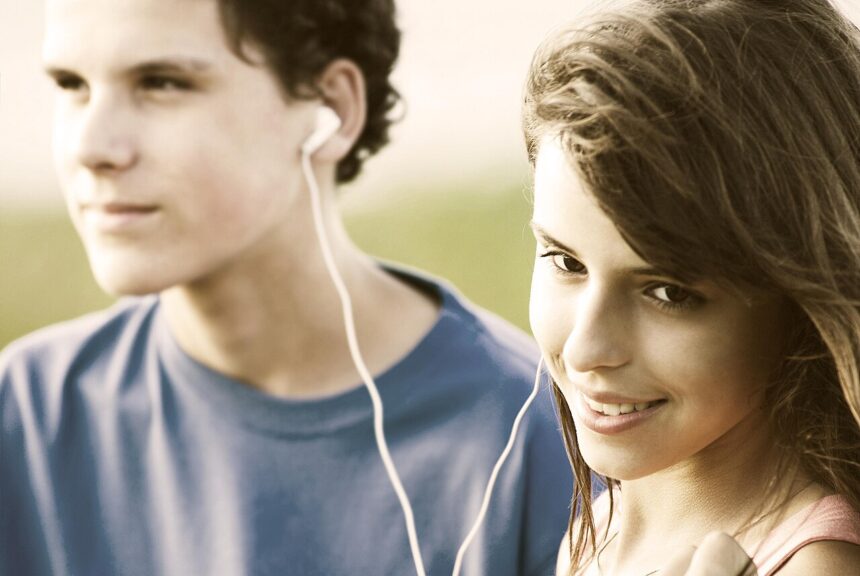
A lot of listening is social — parties, car rides, a shared earbud on the bus — so the good feeling of belonging gets welded to the music itself. Algorithms then narrow the field: streaming and video apps learn what a young listener already likes and keep serving more of it, until a curated diet feels like a personal, organic taste. On top of that, songs now travel as memes. A fifteen-second clip, a dance, a catchphrase from a chorus — these reach people who never chose to listen to the track at all, and the attitudes and styles attached to it arrive with them.
The good and the bad of it
None of this is automatically harmful. Music trends connect young people across countries and backgrounds, give marginalised teenagers a voice and a community, and offer a safe way to rehearse big emotions. Research at the University of Oxford has looked at how strongly music moves us and how it binds groups together — one reason shared songs feel so much like shared identity.
The risks are the mirror image. Trends that glorify money above everything, or treat misogyny and violence as entertainment, can make those attitudes feel normal through sheer repetition. The pressure to match a trend’s look and outlook can crowd out slower, more genuine self-exploration. And as the National Institute of Mental Health notes, adolescence is also the period when many mental health difficulties first appear — which makes the emotional diet of those years worth paying some attention to.
Paying attention without ruining the fun
The answer is not to police what young people listen to; that rarely works and usually backfires. It is simpler than that. Listen a little wider than the algorithm suggests — older music, other genres, things nobody is pushing. Ask, occasionally, what a song is actually saying and whether you agree with it. And treat playlists as something you build on purpose, for the mood you want, rather than whatever drifts past.
Music will keep shaping identity either way; that is what it does, and much of it is good. The only real choice is whether it happens entirely in the background, or with your eyes at least partly open.
Frequently Asked Questions
How does music shape a young person’s identity?
Mainly through belonging and repetition. The genres a teenager lives inside supply a look, a vocabulary and a set of attitudes, and identifying with them becomes a way of saying who you are — to yourself as much as to anyone else. Because the listening is social and constant, those signals are absorbed gradually, the way you pick up an accent.
Why do the songs from your teenage years stay with you for life?
Because music binds tightly to memory and emotion at exactly the age when both are at their most intense. A track from a particular summer becomes the filing system for the people, places and feelings of that summer, so hearing it years later brings the whole period back — and makes the music feel like a part of you rather than something you once listened to.
Do streaming algorithms decide what young people listen to?
Partly. Algorithms learn what a listener already likes and keep serving more of it, which narrows the field over time. The result can feel like purely personal taste while being quietly curated. The listener still makes the final choice — but from a menu someone else has shortened.
Can music trends really change values and behaviour?
They can nudge them. Trends carry values with them — about success, authenticity, money, relationships — and sheer repetition makes those values start to feel like common sense. Music is not mind control, and young people are not passive; but an attitude heard a thousand times in songs you love lands differently from one heard once in a lecture.
Should parents worry about what their teenager listens to?
Worry less about individual songs and more about narrowness. Banning music tends to backfire and drive listening underground. What works better is curiosity: listening together sometimes, asking what a lyric means to them, and encouraging a wider diet than the algorithm serves — older music, other genres, things nobody is promoting.