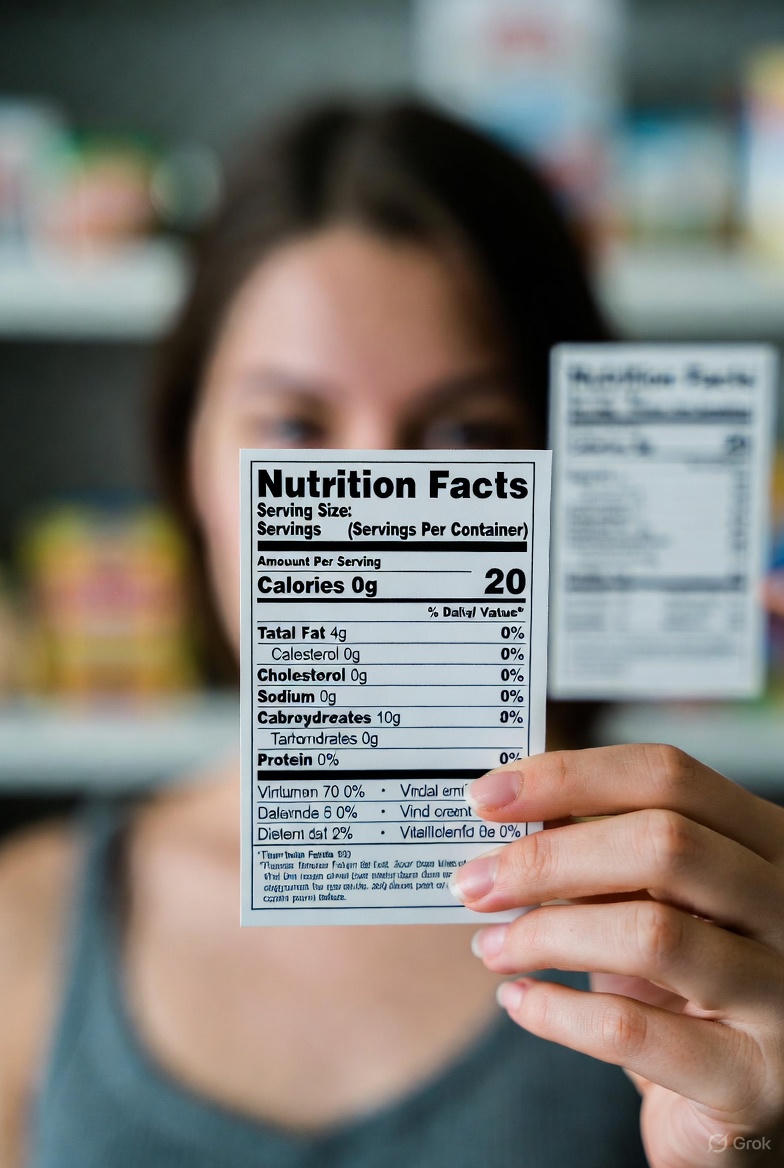
Walking down a grocery store aisle can feel overwhelming. Every package shouts “healthy,” “natural,” or “nutritious,” but how do you know what’s truly good for you? The secret isn’t in the marketing on the front; it’s in the standardised facts on the side or back. Learning how to read nutrition labels for beginners is one of the most empowering skills you can develop for your health. This guide will transform that confusing table of numbers into a clear map for making informed food choices that align with your wellness goals.
Why Bother? The Power of Being an Informed Consumer
You wouldn’t buy a car without knowing its features or fuel efficiency. Think of nutrition labels as the “spec sheet” for your food. They provide objective, regulated data that cuts through clever marketing. By understanding them, you gain the power to:
-
Compare products easily to choose the healthier option.
-
Manage your intake of specific nutrients like sodium, saturated fat, or added sugars.
-
Identify hidden ingredients that might not align with your dietary needs or goals.
-
Take control of your diet based on facts, rather than guesses or trends.
According to a study published in the Journal of the Academy of Nutrition and Dietetics, people who regularly read nutrition labels tend to have healthier diets, consuming more fruits, vegetables, and whole grains, and fewer sugary drinks and processed snacks. It’s a small habit with a significant impact.
Meet Your New Tool: The Nutrition Facts Label
In many countries, including the UK, the US, and the EU, food manufacturers are required to use a standardised nutrition label. While designs vary slightly, they all contain the same core information. Let’s break down the current US label (which is very comprehensive) and note key differences you might see elsewhere.
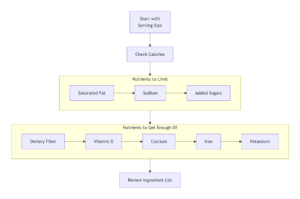
Here is a visual guide to the key sections you need to understand:
Step 1: Start with Serving Size and Servings Per Container
This is the most critical step and the most common pitfall for beginners. All the information on the label is based on one serving.
-
Serving Size: This is a measured amount (e.g., 1 cup, 30g, two crackers). The manufacturer sets it based on what people typically consume, but it may not match your portion.
-
Servings Per Container: This tells you how many of those servings are in the entire package.
The Beginner Trap: You see “150 calories” and think it’s for the whole bag of chips. If the bag contains three servings, eating the entire bag means you’re consuming 450 calories. Always check this first!
Step 2: Check the Calories (And What They’re Made Of)
Calories measure the energy you get from a serving. Your daily needs vary based on age, sex, and activity level.
-
Quick Guide: 400+ calories per serving is considered high for a single food item, while 100 calories is moderate.
-
Look Deeper: A 100-calorie snack pack of cookies is different from a 100-calorie apple—the quality of the calories matters, which is where the following sections come in.
Step 3: Understand the Nutrients – The “Limit These” & “Get Enough” Sections
The label separates nutrients you should limit (for chronic disease prevention) and those you should aim to get enough of.
Nutrients to Limit (Top Section)
These are linked to increased risk of heart disease, high blood pressure, and other health issues.
-
Saturated Fat & Trans Fat: Aim for low amounts. Trans fat should ideally be 0 grams. Look for phrases like “partially hydrogenated oils” in the ingredient list to spot hidden trans fats.
-
Cholesterol: While still listed, for most people, dietary cholesterol (found in animal products) is now considered less impactful on blood cholesterol than saturated and trans fats.
-
Sodium: High sodium intake is a major contributor to hypertension. The American Heart Association recommends no more than 2,300 mg per day, moving toward an ideal limit of 1,500 mg. A product with 20% DV or more per serving is considered high in sodium.
-
Added Sugars: This is a crucial new label requirement. It shows sugars added during processing, not the naturally occurring sugars in fruit or milk. The Dietary Guidelines for Americans recommend limiting added sugars to less than 10% of daily calories (about 50g for a 2,000-calorie diet).
Nutrients to Get Enough Of (Bottom Section)
Most people don’t get enough of these.
-
Dietary Fibre: Essential for digestion and heart health. Aim for 25-30 grams per day. A food with 3g or more per serving is a good source.
-
Vitamin D, Calcium, Iron, and Potassium: These are vital for bone health, blood function, and muscle function. Try to choose foods that provide a higher % DV for these.
Step 4: The % Daily Value (%DV) – Your At-a-Glance Guide
The % Daily Value tells you how much a nutrient in a serving contributes to a total daily diet (based on 2,000 calories, a general benchmark).
-
Quick Decoder Ring:
-
5% DV or less is LOW in a nutrient (good for saturated fat, sodium, added sugars).
-
20% DV or more is HIGH in a nutrient (good for fibre, vitamin D, calcium, iron, potassium).
-
Use %DV to compare products quickly. You don’t need to add up numbers all day; use it as a gauge to see if a food is high or low in what you’re looking for.
Step 5: Don’t Skip the Ingredient List
This list is just as crucial as the Nutrition Facts panel. Ingredients are listed in descending order by weight. The first three ingredients make up the bulk of the product.
-
Look for Whole Foods: Choose products whose ingredients you recognise as real food (e.g., “oats,” “almonds,” “tomatoes”).
-
Spot Hidden Sugars: Sugar has over 60 aliases! Watch for words ending in “-ose” (sucrose, fructose), as well as syrups, nectars, and fruit juice concentrates.
-
Identify Refined Grains: Look for the word “whole” before grains like wheat or oats. “Wheat flour,” “enriched flour,” or “multigrain” (without “whole”) are often refined.
Putting It All Together: Real-World Label Comparisons
Let’s practice with two hypothetical boxes of breakfast cereal.
| Label Section | Cereal A (Seemingly “Healthy”) | Cereal B (Whole Grain Oats) | The Winner & Why |
|---|---|---|---|
| Serving Size | 30g (¾ cup) | 40g (½ cup) | Compare by weight for fairness. |
| Calories | 120 | 150 | Cereal A is lower. |
| Added Sugars | 12g (24% DV) | 1g (2% DV) | Cereal B wins decisively. Cereal A is 40% sugar by weight! |
| Dietary Fiber | 2g (7% DV) | 5g (18% DV) | Cereal B wins. It’s a good source of fibre. |
| Ingredients | Corn flour, sugar, honey, food colouring… | Whole grain oats | Cereal B wins. The first ingredient is a whole food, not a refined grain or sugar. |
This comparison shows how a “low-calorie” claim can be misleading if the product is high in sugar and low in fibre. Cereal B, with more fibre and minimal added sugar, is the far more nutritious and filling choice.
Common Label Claims Decoded
Front-of-package claims are regulated but can be tricky to navigate.
-
Low Fat: Must have 3g or less of total fat per serving. But check for added sugars to compensate for flavour.
-
Light/Lite: Can refer to colour, texture, or calories. It must explain the claim (e.g., “light in sodium”).
-
Reduced Sugar/Sodium: Must have at least 25% less than the original product. It doesn’t mean it’s low in that nutrient.
-
Good Source Of: Provides 10-19% of the DV for a specific nutrient.
-
Natural: This term is poorly regulated and does not necessarily mean “healthy.”
The Golden Rule: Ignore the marketing on the front. Always verify with the facts on the side.
Building Your Confidence: A Simple 3-Step Shopping Routine
-
Flip It Over: Make it a habit to turn the product over and check the label before putting it in your cart.
-
Apply the 5-20 Rule: Quickly scan the %DV. For nutrients to limit (saturated fat, sodium, added sugars), is it 5% or less? For nutrients to get (fibre, vitamins), is it closer to 20% or more?
-
Skim the Ingredient List: Are the first ingredients whole foods? Can you pronounce them? Is the list relatively short?
With practice, this process takes just seconds per product.
Learning how to read nutrition labels for beginners is an investment in your long-term health. It empowers you to move beyond food trends and marketing hype to make choices that truly fuel your body well. For more guides on living a healthier, more inspired life, be sure to explore the wealth of articles available here on InspirationFeed.
Remember, you don’t need to be perfect. Start by focusing on one thing, like comparing the added sugar in your yoghurt or the sodium in your soups. Each informed choice is a step toward a healthier you.