Introduction to Bad Modern Art
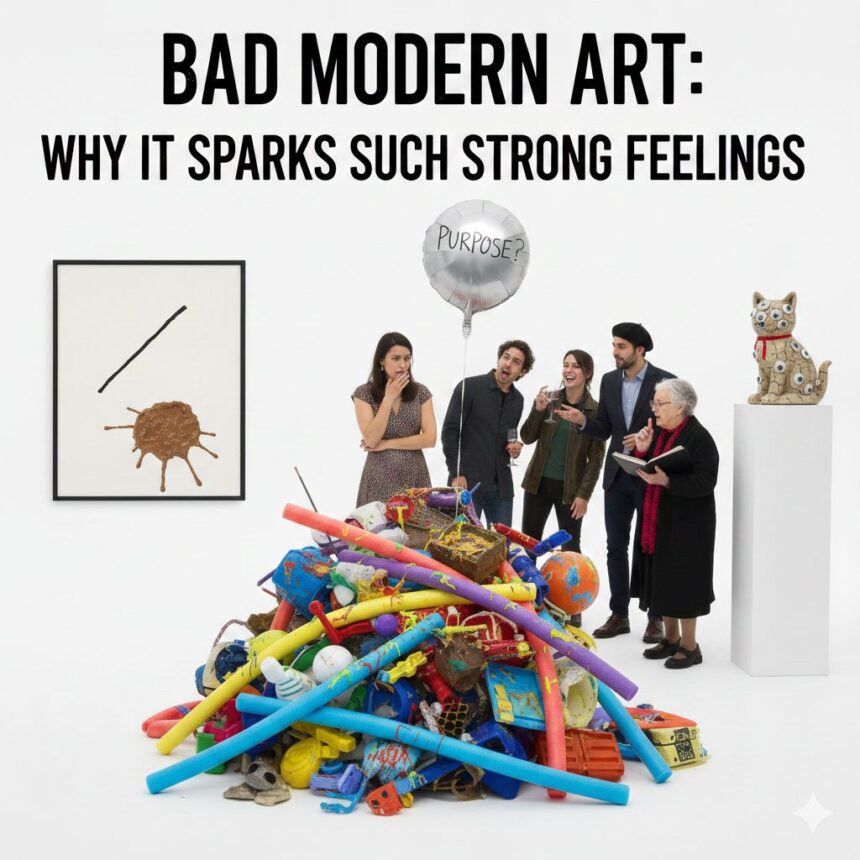
Have you ever walked into a gallery and stared at a painting that looks like a toddler’s finger painting, only to find out it sold for millions? That’s the world of bad modern art, a topic that gets people talking, often with a mix of confusion and frustration. Contemporary art, which began in the late 19th century and continues today, breaks away from traditional rules. It focuses on ideas, emotions, and experiments rather than perfect realism. But when does it cross into “bad” territory? For many, it’s when the piece seems lazy, meaningless, or just plain ugly. This sparks strong feelings because art is personal; it reflects our values and tastes. Some love the freedom it offers, while others feel tricked by the hype. In this article, we’ll explore why bad modern art stirs up so much debate, looking at examples, reasons, and more. Whether you’re an art lover or sceptic, understanding this can make gallery visits more fun. For more creative insights, visit inspirationfeed. Over the following sections, we’ll dive into definitions, famous cases, and psychological angles to unpack this intriguing subject. By the end, you might see bad modern art in a new light, or at least understand why it bothers so many folks.
What Defines Modern Art?
Modern art isn’t just about splashes of colour on a canvas; it’s a movement that started with artists like Van Gogh and Picasso, pushing boundaries beyond realistic portraits and landscapes. It includes styles such as abstract expressionism, minimalism, and conceptual art, in which the idea behind the work often matters more than the final look. But this shift confuses people, leading to labels of bad modern art when pieces don’t meet expectations of skill or beauty. Think of it as art evolving with society, reflecting changes in technology, politics, and culture. For instance, after World War I, artists experimented to capture chaos and emotion. Today, modern art can be anything from installations to digital works. The problem arises when viewers expect traditional craftsmanship but get something abstract. This gap creates tension, as some see innovation while others see a lack of effort. Critics argue that without clear rules, anything goes, making it hard to spot genuine talent. Yet, supporters say this freedom allows for deeper expression. Understanding this definition helps explain why bad modern art feels so divisive; it’s not always about quality but about mismatched expectations in a fast-changing world.
How Do We Judge Art as ‘Bad’?
Judging art as “bad” is subjective, but standard criteria include lack of originality, poor execution, or failure to communicate an idea effectively. In the realm of bad modern art, people often point to works that seem simplistic or random, like a blank canvas or a pile of trash labelled ‘sculpture’. But who decides? Art critics, collectors, and the public all play roles, influenced by trends and market values. For example, if a piece fetches high prices despite appearing unskilled, it fuels accusations of elitism. Personal taste matters too; what one person calls groundbreaking, another deems worthless. Factors like context help: a work might shine in a museum but flop elsewhere. Education on art history can change views, turning hate into appreciation. Still, widespread dislike stems from a sense of exclusion, as if the art world is an inside joke. To judge fairly, consider the artist’s intent, cultural relevance, and emotional impact. This approach reveals that bad modern art isn’t always objectively poor; it’s often a clash of perspectives in a diverse society.
Famous Examples of Controversial Modern Pieces
Some modern artworks have become infamous for sparking outrage, earning the label of ‘bad modern art’. Take Jackson Pollock’s drip paintings; critics called them chaotic messes, yet they’re now icons. Then there’s Tracey Emin’s “My Bed,” an unmade bed with personal items, which many saw as lazy and gross. It sold for millions, intensifying debates. Banksy’s shredded “Girl with Balloon” at auction was a stunt that divided opinions between genius and gimmick. Another is Damien Hirst’s shark in formaldehyde, accused of being more shocking than substantial. These pieces challenge norms, but detractors say they lack skill. Even Picasso’s later works, like his ceramic plates, have been panned for seeming commercial. Visiting sites like the Museum of Bad Art highlights humorous takes on failed attempts. Such examples show how bad modern art thrives on controversy, drawing crowds despite the hate. They force us to question what art should be, blending admiration with annoyance in equal measure.
Jackson Pollock’s Abstracts
Pollock’s style revolutionised art, but also drevolutionisedokin,g like accidents. Fans praise the energy; haters see no talent.
Tracey Emin’s Installations
Emin’s raw, personal works like beds and tents expose vulnerability, but many dismiss them as therapy sessions masquerading as art.
Psychological Reasons Behind the Hate
Why does bad modern art trigger such emotional responses? Psychology offers clues. One reason is the “effort justification” bias; people value art more if it looks hard to make. Abstract pieces seem easy, leading to dismissal. Studies from the American Psychological Association suggest that when people face uncertainty or mortality reminders, they prefer meaningful art over chaotic modern works. This explains why some hate pieces that feel random. Cognitive dissonance plays in, too; if a job doesn’t match our beauty standards, we reject it to avoid discomfort. Social factors amplify this, as group opinions sway individuals—for instance, online forums buzz with rants about “ugly” art, reinforcing negative views. Yet, exposure can change minds, turning hate into curiosity. Understanding these mental processes helps demystify reactions to bad modern art, showing it’s often more about us than the art itself.
The Role of Elitism in Art Criticism
Elitism in the art world fuels perceptions of bad modern art by creating an exclusive club. Galleries and collectors hype works, making outsiders feel dumb for not “getting it.” This snobbery turns off average viewers, who see high prices as proof of a scam. For example, when a banana taped to a wall sells for $120,000, it screams privilege. Critics argue this gatekeeping stifles genuine appreciation. But defenders say expertise is needed to value innovation. Balancing this, public education through museums can bridge gaps. External resources, such as APA’s article on art psychology, provide insights into why we react so strongly. Ultimately, reducing elitism could make bad modern art debates less heated.
Commercialisation and Its Impact
Money changes everything in art, turning creative expression into a market game. Bad marketing is blamed on commercialisation, where hype trumps quality. Auction houses and galleries promote works for profit, inflating the values of questionable pieces. This leads to resentment, as people feel art should inspire, not just enrich the wealthy. Historical shifts, like post-war booms, accelerated this. Today, NFTs and digital art add layers, with commercialisations as well. Yet, commercialisation funds artists, enabling bold experiments. Critics from sites like Artnet highlight annual flops, showing market flaws. Balancing commerce with integrity could reduce hate toward bad modern art.
Lack of Technical Skill: A Common Complaint
A big knock against bad modern art is the apparent absence of skill. Traditional art wows with precise brushwork, but modern pieces might look like anyone could do them. This frustrates viewers who admire mastery in Renaissance works. Artists like Rothko, with their colour fields, are called simplistic. However, skill can be conceptual as well as technical. Defenders note that innovation requires breaking rules. Still, complaints persist, especially in education, where kids’ art mimics pros. Resources from Quora discuss this sentiment. Appreciating both “sides” enriches the conversation.
Shock Value Over Substance
Many modern art pieces rely on shock to grab attention, often through gross or provocative themes. This tactic works for publicity but usually lacks depth, which can lead to backlash. Hirst’s animals in tanks exemplify this, seen as Hirst’s stunts. Critics say true art endures beyond initial gasp. Cultural shifts toward sensationalism fuel this trend. Yet, some shocks provoke thought on society. Balancing is key to avoiding the “bad” label.
Cultural and Societal Influences
Cult“re ”hapes views on bad modern art. In conservative areas, abstract works clash with values, sparking hate. The media amplifies controversies, making pieces infamous. Socialdemocratizing, very polarising, democratising but polarising opinions. Historical contexts, like wartime art, add layers. Understanding cultural lenses helps explain strong feelings.
Key Features of Bad Modern Art
Bold features include:
- Lack of clear meaning leaves viewers puzzled.
- Overreliance on concept over craft.
- High market prices despite simplicity.
- Provocative elements for attention.
These traits define what many call bad modern art, highlighting debates in the field.
Table: Traditional vs. Modern Art Perceptions
| Aspect | Traditional Art | Modern Art (Often Seen as Bad) |
|---|---|---|
| Skill Focus | High technical precision, like detailed portraits | Conceptual ideas, minimal effort apparent |
| Appeal | Universal beauty, effortless to appreciate | Niche requires explanation |
| Value | Based on craftsmanship | Driven by market hype and rarity |
| Reaction | Admiration for talent | Confusion or anger over “laziness.” |
This table compares how people view th two, showing why modern is often labelled as.
Key Takeaways
- Bad modern art is subjective, based on personal and cultural tastes.
- Common gripes include commercialisation and elitism.
- Understanding psychology can soften strong reactions.
- Controversial pieces often spark meaningful discussions
These points summarise the emotional pull of the topic.
FAQ Section
What Makes Art ‘Modern’?
Modern art spans the 1860s to the 1970s, focusing on innovation rather than tradition.
Why Do Prices for Bad Modern Art Soar?
Market dynamics, collector status, and scarcity drive values, not always quality.
Can Bad Modern Art Still Be Valuable?
Yes, if it provokes thought or reflects society, even if disliked.
How to Appreciate Modern Art Better?
Read about artists’ intents and visit galleries with an open-minded artist’s illusion.
Conclusion
In wrapping up, bad modern art continues to divide, but that’s part of its charm. It challenges us to think that’s obvious, even if it frustrates. By exploring factors like psychology, culture, and commerce, we see it’s not just about the art but also about our reactions. Nexit’sme you encounter a puzzling piece, pause and reflect; it might spark something new. Thanks for reading!