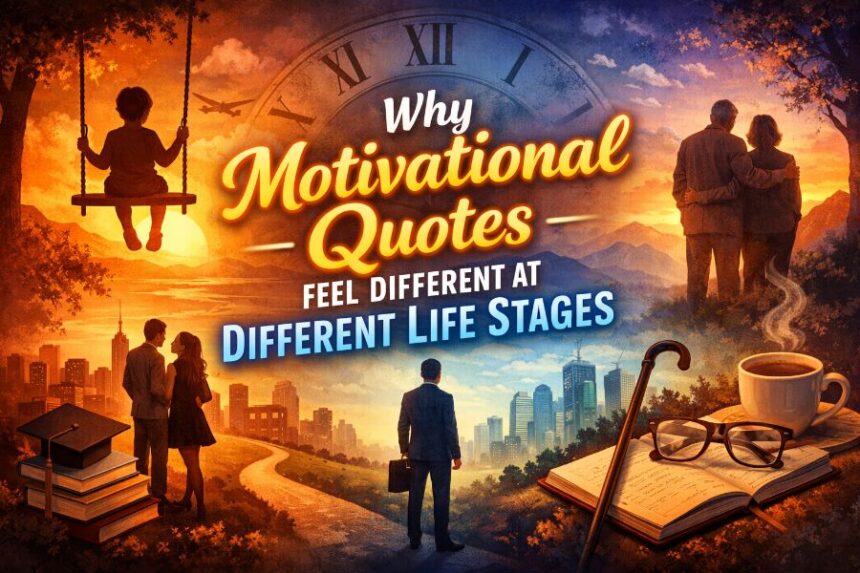
We’ve all experienced it. A motivational quote that once ignited a fire in your belly during your college years might now elicit a wry smile or a sense of distant nostalgia. Conversely, a saying you once scrolled past without a second thought can, years later, strike you with the force of profound truth. This shifting landscape of inspiration is not a matter of quotes changing, but of you changing. The psychology behind why motivational quotes resonate differently at various life stages is a fascinating intersection of cognitive development, shifting priorities, and accumulated experience.
This exploration delves into the core psychological principles that shape our reception to these snippets of wisdom, providing a framework to understand your own evolving relationship with motivation.
The Foundational Psychology: Why Quotes “Work” at All
Before examining the differences, it’s crucial to understand the universal psychological mechanisms that make motivational quotes powerful. They operate on several levels:
-
Cognitive Appraisal: Quotes can reframe our perception of a situation (a process called cognitive reappraisal). “The obstacle is the way” transforms a problem into a path.
-
Emotional Regulation: They can validate or shift our emotional state. “This too shall pass” directly addresses anxiety and sadness, offering a temporal perspective.
-
Social Connection: Quotes make us feel part of a larger human experience, reducing feelings of isolation. Knowing others have felt the same is comforting.
-
Heuristic Trigger: They act as mental shortcuts, condensing complex life advice into memorable, actionable phrases.
However, the efficacy of these mechanisms is entirely filtered through the lens of the reader’s current life stage.
Stage 1: The Launch Phase (Late Teens to Early 20s)
This is often the period of greatest appetite for motivational content. Life is a canvas of possibilities, and quotes serve as bold strokes of paint.
Psychological Drivers:
-
Identity Formation: According to Erik Erikson’s stages of psychosocial development, this stage is centered on Identity vs. Role Confusion. Quotes provide proto-identities and aspirational selves.
-
Future-Oriented Optimism: The prefrontal cortex is still maturing, impacting long-term planning and risk assessment, often leading to a “sky’s the limit” outlook.
-
External Validation: Motivation is often sourced externally—from mentors, peers, and iconic figures.
What Resonates:
Quotes about potential, courage, and defining one’s own path.
Example Quote: “The future belongs to those who believe in the beauty of their dreams.” – Eleanor Roosevelt
-
Then: A thrilling call to arms, validating big dreams.
-
Later: May feel simplistic, overlooking the hard work and luck involved.
Key Takeaways for This Stage:
-
Quotes are used as fuel for exploration and identity-building.
-
The focus is on limitless possibilities and breaking away.
-
There is less experiential weight to judge the quote against, so acceptance is more wholehearted.
Stage 2: The Building Phase (Late 20s to 40s)
Life complexity increases dramatically with career advancement, serious relationships, parenting, and financial responsibilities. The abstract meets the concrete.
Psychological Drivers:
-
Socioemotional Selectivity: Theory suggests a shift from focusing on expansive future goals to valuing emotionally meaningful present-day experiences and deepening existing relationships.
-
Mastery & Competence: Erikson’s stage of Generativity vs. Stagnation takes hold. Motivation is linked to building, creating, and contributing.
-
Cognitive Load: The sheer number of responsibilities demands efficiency. Motivational content must be highly relevant and applicable.
What Resonates:
Quotes about resilience, discipline, focus, and the meaning found in commitment and daily grind.
Example Quote: “It is not the strength of the body that counts, but the strength of the spirit.” – J.R.R. Tolkien
-
Before: Perhaps a cool line from a fantasy novel.
-
Now: A profound truth about persevering through work deadlines, parenting struggles, or personal setbacks. The “spirit” is your tenacity.
A Comparison of Resonance:
| Life Stage | Primary Need | Quote Example | Psychological Function |
|---|---|---|---|
| Launch Phase | Identity & Potential | “Don’t be pushed by your problems; be led by your dreams.” | Aspirational self-formation, future-oriented optimism |
| Building Phase | Resilience & Mastery | “The way to get started is to quit talking and begin doing.” – Walt Disney | Cognitive reappraisal of obstacles, prompting action |
Stage 3: The Editing & Meaning-Making Phase (50s and Beyond)
Often characterized by reflection, integration, and a changed perspective on time. The horizon of the future is different, prompting a reevaluation of what matters.
Psychological Drivers:
-
Integrity vs. Despair: Erikson’s final stage focuses on looking back on life with a sense of fulfillment or regret. Motivation is tied to making peace and finding holistic meaning.
-
Crystallized Intelligence: The accumulation of knowledge and experience provides a rich database to interpret wisdom. Quotes are no longer instructions but mirrors.
-
Time Perspective: As theorized in Laura Carstensen’s socioemotional selectivity theory, the perception of time as limited focuses attention on emotional satisfaction and legacy.
What Resonates:
Quotes about acceptance, wisdom, gratitude, the passage of time, and the interconnectedness of life’s journey.
Example Quote: “The wound is the place where the light enters you.” – Rumi
-
Earlier: Might be seen as a poetic metaphor for recovery.
-
Now: Can be understood as a deep truth about post-traumatic growth, the value of scars, and how past hardships shaped present strength and compassion. The light is hard-won wisdom.
The Role of Neuroplasticity and Confirmation Bias
It’s important to note that our brains are not passive recipients. Neuroplasticity—the brain’s ability to rewire based on experience—means each life stage physically alters how we process information. Furthermore, confirmation bias ensures we are drawn to quotes that affirm our current life situation and challenges. A new parent will notice quotes about patience, an entrepreneur about risk, and so on.
Applying This Understanding: How to Curate Motivation for Your Current Stage
-
Acknowledge Your Context: Be honest about your primary challenges. Are you seeking direction, perseverance, or peace?
-
Seek Stage-Relevant Wisdom: Don’t force resonance. If grandiose ambition quotes feel hollow, explore content on mindfulness in action or sustainable success.
-
Revisit Old Favorites: Look back at quotes you once loved. Analyze why they appealed then and what your reaction is now. This is a powerful tool for self-tracking your psychological growth.
-
Go Beyond the Quote: Use the quote as a starting point for journaling. The real motivational quotes are in the personal meaning you excavate.
The Authoritative Perspective: What Research Suggests
Studies on lifespan development and emotion regulation support this staged interpretation. Research published by the American Psychological Association highlights how emotional goals shift from information-seeking in youth to emotion-regulation in older age. Furthermore, a study on motivational quotes psychology from the University of Cambridge suggests that while inspirational quotes can boost task performance on simple tasks, their effect on complex, long-term goals is more nuanced and highly dependent on the individual’s pre-existing mindset and alignment with personal values.
Conclusion: The Quote is a Constant, You Are the Variable
The journey through life stages is a journey through different psychological landscapes. A motivational quote is a static set of words, but it acts as a probe into the dynamic system of your mind, experiences, and current priorities. Its power and meaning are co-created in that moment of engagement. The quote that once promised triumph might later teach acceptance, and the one that urged action might later counsel patience.
This understanding liberates us from seeking a single, eternal source of motivation. Instead, we can embrace the evolving dialogue between external wisdom and internal growth. By understanding the psychology of motivational quotes, we can curate inspiration that genuinely serves who we are now, while respecting the person we were and anticipating the person we are becoming. For more insights into the intersection of mindset, psychology, and personal growth, explore the archives here at inspirationfeed.