What Is “Smartphone Attention Span”?
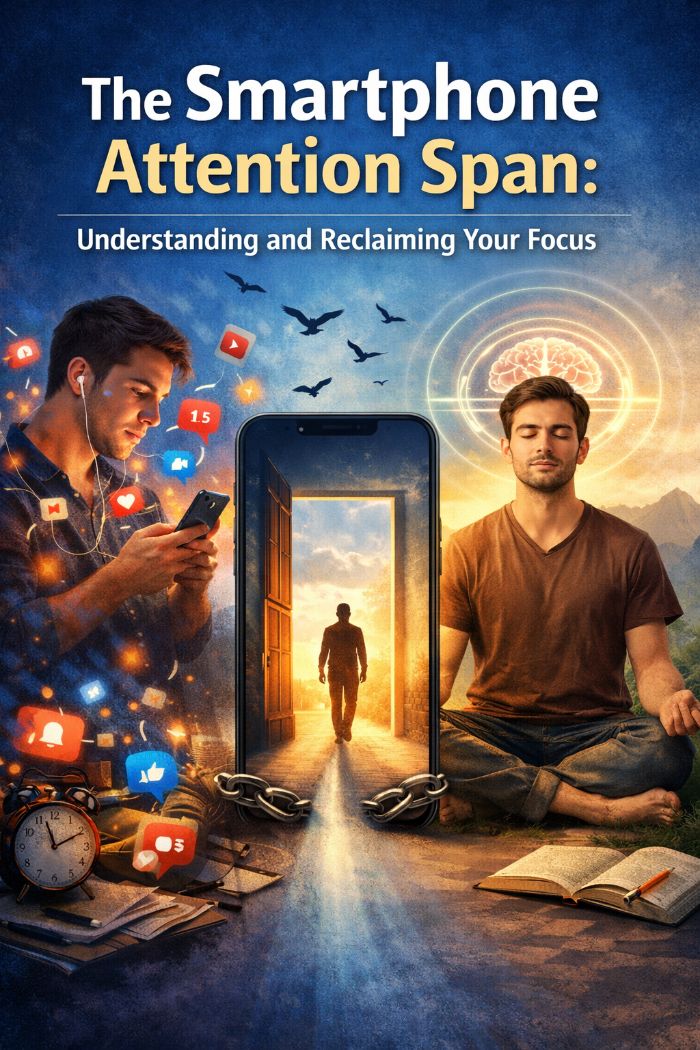
“Smartphone attention span” describes our declining ability to maintain deep concentration, a phenomenon fueled by constant digital interaction. Essentially, notifications, social media, and rapid app-switching train our brains to crave frequent novel stimuli. This conditioning reduces our tolerance for sustained, focused tasks. The issue extends beyond mere distraction, reflecting how a device designed to capture our attention can reshape our very cognitive patterns.
Consequently, this concept has gained prominence as many people now struggle to read lengthy texts or engage in uninterrupted deep work.
Why This Topic Is Crucial Now
The discussion around smartphone attention span is now a mainstream cultural issue, driven by a clear awareness of its costs.
-
Productivity Impact: Deep work, which is essential for creativity and complex problems, is eroding. Constant context-switching can reduce effective IQ and prolong task completion.
-
Mental Well-being: Research links heavy smartphone use to increased anxiety, poorer sleep, and lower life satisfaction. Notably, the “compare and despair” cycle and FOMO (fear of missing out) are direct byproducts.
-
Social Consequences: Phones often degrade real-world interactions, leading to “phubbing” (snubbing someone for your phone) and impairing our empathy and listening skills.
-
Economic Drivers: Our attention is the product in the “attention economy.” Major platforms are engineered explicitly to maximize engagement, making our focus a commodity sold to advertisers.
Key Factors Influencing Smartphone Attention Span
Several interlocking elements shorten our focus:
-
Addictive Design: Features like infinite scroll, pull-to-refresh, and variable rewards (like “likes”) use behavioral psychology to create compulsive habits.
-
The Notification Onslaught: The perpetual ping of alerts creates a false sense of urgency. This fractures concentration and triggers demanding dopamine loops.
-
The Multitasking Myth: Smartphones encourage rapid task-switching, which our brains handle poorly. The result is cognitive exhaustion, more errors, and less deep work.
-
Evolving Content Format: Bite-sized, visual content (e.g., TikTok, Reels) trains the brain to prefer quick information hits over nuanced, long-form material.
-
Personal Habituation: Ultimately, our own behavior—checking the phone at every hint of boredom—reinforces the neural pathways of distraction.
Practical Tips for Reclaiming Your Focus
Better decisions require strategy, not just willpower.
-
Audit Notifications: First, disable all non-essential alerts. Allow only truly time-sensitive messages from people, not apps.
-
Create Phone-Free Zones: Designate sacred spaces for focus, such as the bedroom, dinner table, or the first work hour. For example, use a physical alarm clock to eliminate the phone from your bedtime routine.
-
Leverage Built-in Tools: Use Digital Wellbeing (Android) or Screen Time (iOS) to set app limits and track usage. Measurement often drives improvement.
-
Embrace “Single-Tasking”: Dedicate blocks of time (like 25-50 minutes using the Pomodoro Technique) to one task, with your phone in another room.
-
Curate Your Environment: Charge your phone outside the bedroom. During work, consider website blockers or grayscale mode to make your screen less appealing.
-
Practice Offline Focus: Regularly engage in activities that demand sustained attention, such as reading physical books, pursuing a hobby, or spending time in nature.
Real-World Relevance
This issue transcends personal productivity. In education, students grapple with lecture comprehension. In the workplace, meetings suffer from divided attention, stifling innovation. For relationships, a phone on the table can reduce connection and trust. Therefore, addressing our attention span is fundamental to improving performance, creativity, and human connection.
Conclusion and Future Outlook
The smartphone attention span challenge is a defining feature of our era. While the technology is not inherently negative, its current economic model often conflicts with our cognitive well-being. The goal is to foster a more intentional, human-centric relationship with our devices.
Looking ahead, we can expect several trends:
-
A Rise in “Dumb Phones”: A growing counter-movement values simplicity and focus.
-
Regulatory Pressure: Potential “right to attention” laws may limit persuasive design, especially for children.
-
Tech-Assisted Focus: New AI tools could actively protect concentration by managing communications intelligently.
-
Cultural Shifts at Work: Companies may formally adopt “focus hours” and phone-free policies.
Ultimately, reclaiming your attention is an act of reclaiming agency over your time and your mind. By understanding the mechanisms at play and acting deliberately, we can harness technology’s power without letting it fragment our capacity to think, create, and connect.