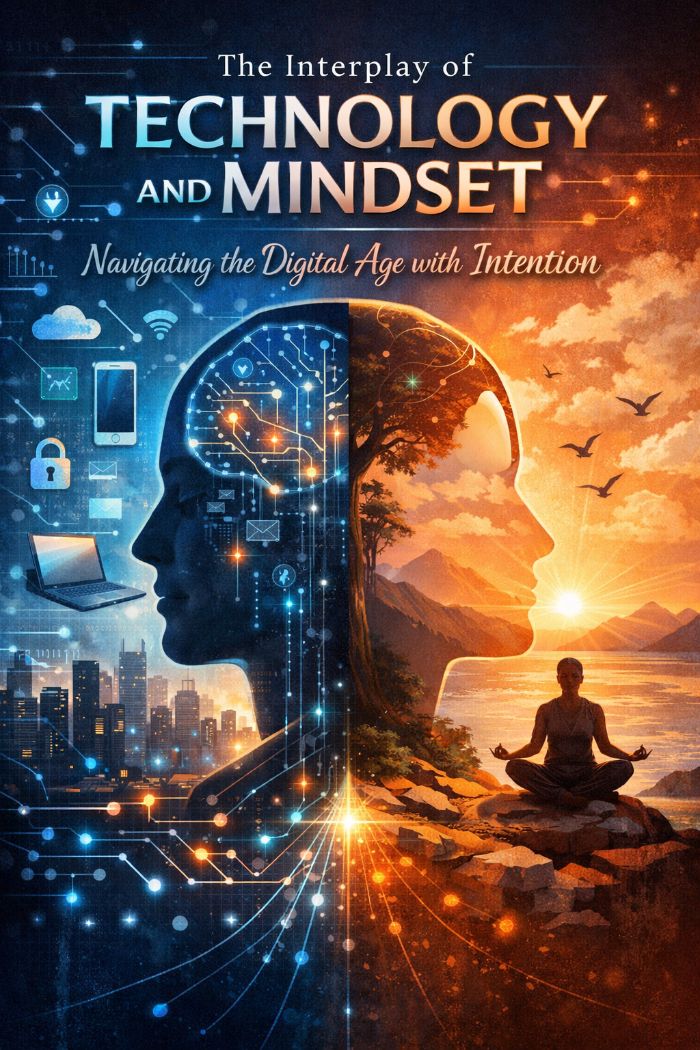
In the 21st century, technology is no longer merely a set of tools we use; it is the ecosystem in which we live, work, and think. Simultaneously, our mindset—the established set of attitudes and beliefs that shape our perception and behavior—has never been more critical. The dynamic relationship between technology and mindset represents one of the most defining dialogues of our time. It’s the study of how our internal psychological frameworks determine how we adopt, use, and are shaped by technology, and conversely, how technology itself influences and alters those very frameworks. Understanding this symbiosis is essential for thriving in a world of constant digital flux.
What Does “Technology and Mindset” Mean?
At its core, the concept examines a two-way street:
-
Mindset as a Lens for Technology: This refers to the attitudes we bring to technology. A growth mindset (believing abilities can be developed) sees a new software program as a learnable challenge. A fixed mindset might avoid it for fear of failure. A scarcity mindset may see AI as a job thief, while an abundance mindset might view it as a tool for unlocking human creativity. Our preconceptions about change, privacy, learning, and connection profoundly filter our technological experiences.
-
Technology as a Shaper of Mindset: Our digital environments actively sculpt our cognitive processes. Social media algorithms, designed for engagement, can promote polarized thinking (binary, us-vs-them perspectives). The constant flow of notifications cultivates a distracted mindset, eroding our capacity for deep focus. Conversely, access to global learning platforms can foster a curious and self-directed learning mindset. The design of our tools subtly trains our brains.
This interplay determines whether technology serves as a propellant for human potential or a source of anxiety, division, and stagnation.
Why Is This Crucial and Gaining Popularity?
The convergence of several megatrends has thrust this topic into the spotlight:
-
Exponential Pace of Change: Technologies like AI, biotechnology, and Web3 are evolving faster than societal norms and regulations can adapt. A rigid mindset leads to future shock and irrelevance. Cultivating an adaptive, agile mindset is no longer a luxury but a necessity for career resilience and personal well-being.
-
The Attention Economy: Tech giants are engaged in a battle for our most finite resource: attention. Understanding how platform design exploits psychological vulnerabilities (e.g., variable rewards, social validation) is the first step in reclaiming cognitive sovereignty. This has sparked popular movements like digital minimalism, which is as much a mindset shift as a behavioral one.
-
Societal Challenges: Issues like misinformation, digital addiction, and algorithmic bias are fundamentally problems of human psychology amplified by technology. Solving them requires not just better tech, but a more critical, empathetic, and digitally literate mindset at a population scale.
-
The Future of Work: As automation handles routine tasks, uniquely human skills—critical thinking, creativity, collaboration—are paramount. Developing these requires a shift from a transactional mindset (completing tasks) to a creative and strategic mindset. Technology is the tool, but mindset is the operator.
Key Factors Influencing the Technology-Mindset Dynamic
Several interconnected factors shape this relationship:
-
Psychological Foundations: Individual traits like openness to experience, neuroplasticity, and fear of failure determine one’s initial posture toward new tech.
-
Sociocultural Context: The narratives fed to us by media, education systems, and peer groups are powerful. Is tech framed as a dystopian threat or a utopian savior? Cultural values around community vs. individualism also shape how we use connective tools.
-
Economic & Structural Incentives: Business models (ad-driven vs. subscription) dictate tech design. A platform monetizing attention will be designed for addictive use, encouraging a consumption mindset. A tool sold for productivity will (ideally) be designed for a focused, efficient mindset.
-
Design and User Experience (UX): This is the direct interface between tech and mind. Ethical, humane design (featuring “focus modes,” sensible defaults, and transparency) supports agency. Manipulative dark patterns (hidden costs, endless scroll) foster impulsivity and helplessness.
-
Access and Digital Literacy: Inequitable access creates vast divides. Beyond mere connectivity, the mindset to use technology effectively—to create, not just consume; to verify, not just share—is a critical factor in empowerment.
Practical Tips: Making Better Decisions at the Intersection
We are not passive recipients. We can cultivate a more intentional relationship with technology.
-
Audit Your Digital Diet: Periodically review your tech use. What mindsets do your most-used apps encourage? Does social media feed comparison (scarcity mindset) or inspiration (growth mindset)? Curate your inputs.
-
Cultivate a “Tool vs. Toy” Mindset: Consciously categorize your tech. Is your smartphone in this moment a tool for navigation or connection, or a toy for mindless diversion? Intentional categorization helps regulate use.
-
Embrace the “Beginner’s Mind” (Shoshin): Approach new technologies with curiosity rather than judgment or fear. Ask, “What can this do? What problems can it solve?” This open, learning-oriented mindset is an antidote to technophobia.
-
Practice Technological Friction: Intentionally introduce barriers to harmful patterns. Delete tempting apps during work hours, use grayscale mode to reduce visual appeal, or charge your phone outside the bedroom. Design your environment for your desired mindset.
-
Develop Critical Algorithmic Literacy: Regularly remind yourself that curated feeds are not reality. Actively seek diverse perspectives. Understand that recommendation engines optimize for engagement, not truth or well-being.
-
Schedule Analog Time: Protect periods for deep work, face-to-face conversation, and nature activities that cultivate patience, empathy, and sustained focus, counterbalancing the tech-shaped mind.
Real-World Relevance: From Individuals to Institutions
This isn’t abstract. It manifests everywhere:
-
In Education: Schools moving from teaching pure software skills to fostering a computational thinking mindset—problem decomposition, pattern recognition, abstraction.
-
In Business: Companies with a digital transformation mindset empower employees to experiment and fail fast, while those with a fixed, hierarchical mindset see tech as merely a cost-cutting lever.
-
In Healthcare: Patients with a proactive health mindset use wearables and data for preventive wellness, while the passive mindset sees them as mere trackers.
-
In Democracy: A citizenry with a critical inquiry mindset uses technology to research, debate, and organize. A passive, consumptive mindset is vulnerable to misinformation and manipulation.
Conclusion: Reclaiming Agency in the Digital Epoch
The fusion of technology and mindset ultimately concerns human agency. Technology, in its raw form, is ambivalent. It can connect us across continents or isolate us in a room of people. It can democratize knowledge or create echo chambers of ignorance. The variable that determines the outcome is us—our awareness, our intentions, and the mindsets we choose to cultivate.
The goal is not to reject technology, but to engage with it from a position of strength and self-awareness. By developing a growth-oriented, critical, and intentional mindset, we can harness technology to augment our humanity—to learn faster, create more beautifully, solve pressing problems, and connect more meaningfully. We must move from being passive users to becoming conscious architects of our own cognitive and digital landscapes.
Future Outlook: The Mindset-Centric Tech Evolution
Looking ahead, the most significant developments may be less about new gadgets and more about a growing recognition of this psychological dimension:
-
The Rise of “Mindful Tech”: Expect a market shift toward products designed with well-being as a core KPI, not an afterthought. Technology that explicitly supports focus, mental health, and intentionality will grow.
-
Mindset as a Curriculum: Digital literacy education will expand to include cognitive and emotional literacy—teaching how tech affects the brain, mood, and beliefs, from primary schools to corporate training.
-
Ethical AI and Human-Centered Design: The conversation will intensify around building AI systems that not only avoid bias but actively promote prosocial mindsets—collaboration, empathy, and reasoned debate.
-
The Integration of Neurotechnology: As brain-computer interfaces develop, the connection between tech and mindset will become literal. The ethical imperative to protect cognitive liberty and mental privacy will be paramount.
The trajectory of our future is being written at the nexus of code and cognition. By bringing as much rigor to cultivating our mindsets as we do to developing our technologies, we can steer toward a future where technology doesn’t shape us by default, but where we, with clarity and purpose, shape it and, in doing so, shape ourselves.