
Quick Answer: A Tesla pairs over-the-air software updates, camera-based driver assistance and a minimalist interior with one very practical problem: keeping that interior clean. The technology is impressive, but the driver-assistance systems still need an attentive driver at all times, and the range and charging figures depend heavily on the model. As for car mats, buy ones made specifically for your model, in a durable material such as TPE or heavy-duty rubber, and make sure they lock into place so they cannot slide under the pedals.
Tesla changed what people expect from a car. Updates arrive overnight, the car drives itself a little on the motorway, and the cabin has almost no buttons. That is the part everyone talks about. The less glamorous part is that the pale, minimalist interior shows every muddy footprint, which is where a good set of car mats earns its keep. This guide covers both: what the technology actually does, and how to protect the interior properly.
Driver assistance: useful, not self-driving
The most misunderstood thing about a Tesla is what Autopilot and Full Self-Driving actually are. Both are driver-assistance systems. Autopilot handles steering, acceleration and braking within a lane on motorways and similar roads. Full Self-Driving (Supervised) goes further, handling turns, junctions and lane changes on city streets as well. But in both cases the driver must stay attentive and ready to take over. Neither system makes the car autonomous, and Tesla’s own description is clear on that point. The Autopilot page on Tesla’s site sets out what each feature does and what it requires of the driver.
Features such as Navigate on Autopilot, Smart Summon and automatic parking are genuinely handy. Smart Summon moves the car slowly out of a parking space to where you are standing, which is useful in a tight car park. None of them removes the need for a driver who is watching the road.
Tesla Vision and safety
Tesla moved away from radar and now relies on cameras, a system it calls Tesla Vision. The cameras feed object recognition, collision warnings and lane detection. The change was controversial when it happened, and it is worth knowing about if you are comparing a newer Tesla with an older one: the hardware in the car matters more than the software version for what the car can see.
Over-the-air updates
One thing Tesla unquestionably does better than most carmakers is software. Updates arrive over the air, like a phone update, and can add features, change the interface or improve efficiency without a visit to a dealer. The downside is the same as with any software: an update can change something you liked, and not every update is an improvement. Still, a car that gains features after you buy it is a real advantage.
The app and the cabin
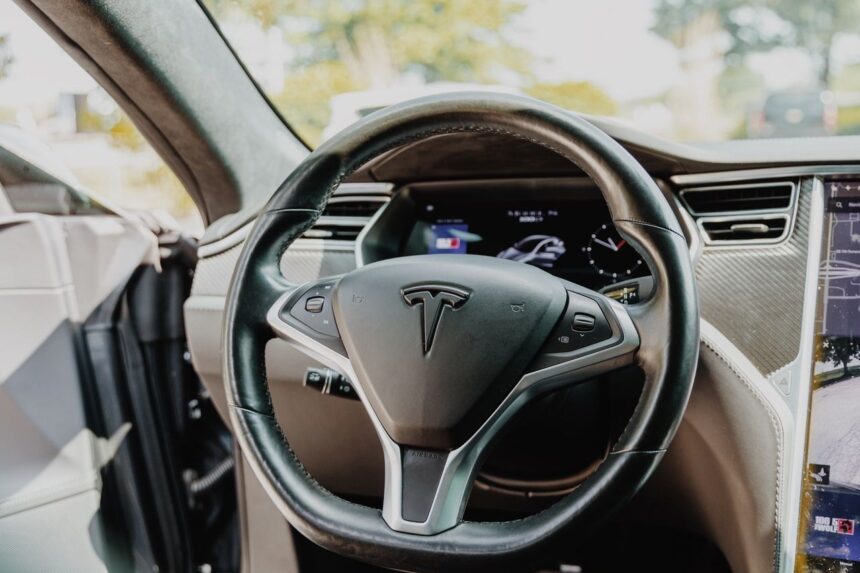
The Tesla app lets you pre-heat or cool the car, check charging, lock and unlock, and find the car in a car park. Inside, the cabin is famously spare: a single large touchscreen controls almost everything, from the mirrors to the glovebox. Higher-spec models have a HEPA filtration system Tesla calls Bioweapon Defense Mode, which filters the cabin air. It is a memorable name for what is, in practice, a very good air filter.
Range and charging, honestly stated
Range is where Tesla’s marketing and reality meet, and the honest version is that it depends on the model. The longest-range Model S has been rated at over 400 miles by the US Environmental Protection Agency, while smaller models are rated considerably lower, and cold weather, speed and heating all reduce real-world range. Treat the headline figure as a best case, not a promise.
Charging is similar. Tesla says a V3 Supercharger can add up to 175 miles of range in 15 minutes, and a typical stop is measured in tens of minutes rather than hours. That is fast by EV standards, but it is still slower than filling a petrol tank, and the time depends on the charger, the battery’s state of charge and the weather. Tesla’s charging page explains the network and the speeds.
Why car mats matter in a Tesla
A Tesla’s interior is mostly light-coloured, flat surfaces, which look superb in a showroom and show every mark in real life. Good mats protect the carpet from mud, water and spills, and they are far easier to clean than the carpet underneath. They also protect resale value: a stained carpet is one of the first things a buyer notices.
Look for mats made from thermoplastic elastomer (TPE) or heavy-duty rubber. They are durable, waterproof and easy to rinse off. Carpet mats look smarter but absorb water and stains. Whichever you choose, buy mats made specifically for your model, Model 3, Model Y, Model S or Model X, so they cover the footwells fully and lock into the factory fixings. A mat that slides under the pedals is a safety hazard, not an accessory.
Choosing and buying mats
Start with Tesla’s own shop, which sells custom-fit mats for each model. Aftermarket brands such as WeatherTech, 3D MAXpider and Husky Liners also make well-regarded Tesla-specific mats, often with raised edges that hold water and slush. Check three things before you buy: the material, the fit for your exact model and year, and whether the mats use the factory anchor points. Price is a poor guide on its own; a cheap universal mat that does not fit properly is worse than no mat at all.
The same rule applies to the rest of the interior. A Tesla rewards care: wipe the screen with a microfibre cloth, vacuum the mats regularly, and treat the seats as you would any light-coloured upholstery. The technology gets the attention, but the mats do the quiet work of keeping the car looking like it did on day one.
Frequently Asked Questions
Is Tesla Full Self-Driving actually self-driving?
No. Full Self-Driving (Supervised) is a driver-assistance system: it can steer, brake, change lanes and handle junctions, but the driver must stay attentive and ready to take over at all times. It does not make the car autonomous.
What is Tesla Vision?
Tesla Vision is Tesla’s camera-based system for driver assistance and safety. Tesla removed radar from its cars and now relies on cameras for object recognition, collision warnings and lane detection.
How far can a Tesla go on one charge?
It depends on the model. The longest-range Model S has been rated at over 400 miles by the US Environmental Protection Agency, while smaller models are rated lower. Cold weather, speed and heating all reduce real-world range.
What car mats fit a Tesla best?
Mats made specifically for your model and year, in a durable waterproof material such as TPE or heavy-duty rubber, with raised edges and factory anchor points. Avoid universal mats that do not lock into place, as they can slide under the pedals.