Introduction
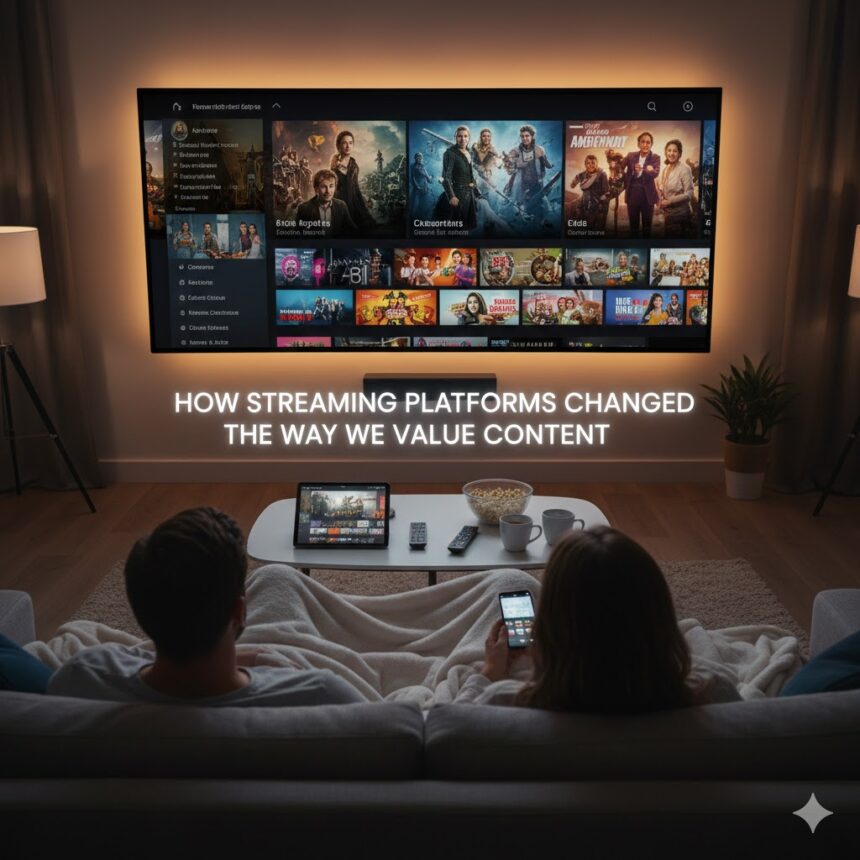
The emergence of streaming platforms represents one of the most profound cultural shifts of the 21st century, a transformation so complete that it has fundamentally altered how we discover, consume, and value content. In less than two decades, we’ve moved from carefully curated personal media collections to vast, algorithmically-driven libraries accessible with a single click. This shift extends far beyond mere convenience, reshaping our relationship with art, entertainment, and information in ways we’re only beginning to understand.
The streaming culture’s impact has been both liberating and disruptive. While granting unprecedented access to global content, it has simultaneously transformed content from a tangible possession to a transient experience. This article explores how this seismic shift in distribution has redefined what we value, how we value it, and the very economics of creative work in the digital age. For creators and consumers alike, understanding this evolution is crucial to navigating the modern media landscape.
From Ownership to Access: The Psychological Shift in Content Value
The Tangible Era: Physical Media as Cultural Artifacts
Before the streaming revolution, our relationship with content was predominantly physical and possessive. Consider the cultural significance of:
-
Record collections that served as personal archives of musical identity
-
Bookshelves that displayed intellectual tastes and literary journeys
-
DVD libraries that represented curated cinematic preferences
-
Video game cartridges and discs that required intentional acquisition
Physical media wasn’t merely functional—it was symbolic. These collections represented financial investment, personal curation, and cultural capital. The act of purchasing an album or film was deliberate, often involving research, recommendation, or personal discovery. This intentionality created a different psychological relationship with content, where value was tied to both the artistic work and its physical manifestation as a possession.
The Subscription Model: Redefining Value as Service
Streaming platforms introduced a radically different paradigm: access over ownership. For a recurring fee, subscribers gain entry to vast digital libraries—a model that has transformed content from product to service. This shift carries significant implications for how we value what we consume:
-
The Paradox of Infinite Choice: While offering more content than any individual could previously access, this abundance can create decision paralysis and devalue individual works.
-
The Disappearing Library: Content rotates on and off platforms based on licensing agreements, creating a transient relationship with media.
-
Reduced Commitment Threshold: With no additional cost per view, experimentation is easier, but investment in any single piece of content is often lower.
-
The Devaluation of the Back Catalog: When everything is available simultaneously, the distinction between new releases and classic works can become blurred.
This transformation in content valuation represents a fundamental reordering of the consumer-creator relationship—one that continues to evolve as the streaming market matures.
Algorithmic Curation: How Discovery Shapes Value
From Human Gatekeepers to Digital Intermediaries
Traditionally, content discovery was mediated by human gatekeepers: critics, editors, record store employees, and television programmers who curated what audiences encountered. Streaming platforms have largely replaced these human intermediaries with sophisticated recommendation algorithms that analyze our viewing habits, preferences, and even viewing times to suggest what we might enjoy next.
This algorithmic curation has created a new value ecosystem where visibility is increasingly determined by:
-
User engagement metrics (watch time, completion rates)
-
Similarity clustering (“because you watched” recommendations)
-
Trend analysis (what’s popular in your demographic or region)
-
Platform promotion (original content prioritized over licensed material)
The “Content vs. Context” Dilemma
In this environment, the context in which content appears can be as important as the content itself. A film buried deep in a streaming service’s library has less perceived value than one featured on the home page, regardless of its relative artistic merits. This has led to what some analysts call “context inflation“—where marketing placement and algorithmic favor significantly influence perceived value independent of quality.
A study on media consumption patterns noted: “When choice architecture is determined by predictive algorithms rather than human curation, consumers increasingly value what is shown to them rather than actively seeking what they might value.” This fundamental shift in discovery has profound implications for how cultural works gain attention in the digital age.
The Economic Reconfiguration: New Models, New Challenges
Revenue Streams in the Streaming Economy
The economics of content creation have been completely transformed by streaming platforms. Where once sales of physical units or tickets provided clear revenue streams, streaming introduces more complex, scaled compensation models. The table below illustrates key differences between traditional and streaming economic models:
| Aspect | Traditional Model | Streaming Model |
|---|---|---|
| Primary Revenue | Unit sales (tickets, albums, DVDs) or advertising | Subscription fees or ad-supported streaming |
| Payment to Creators | Advances, royalties based on sales | Revenue sharing based on streams/viewership |
| Value Driver | Popularity driving unit sales | Engagement retaining subscribers |
| Content Lifespan | Potential for long-tail sales | Often concentrated in the initial release window |
| Discoverability Costs | Primarily borne by distributor/studio | Increasingly borne by creators themselves |
The Volume Imperative and Its Creative Consequences
This economic shift has created what industry analysts term “the volume imperative.” With revenue tied to engagement rather than direct sales, platforms often prioritize quantity and watch time over singular artistic achievement. This has led to:
-
The rise of “bingeworthy” content designed to keep viewers continuously engaged across episodes
-
Increased pressure on creators to produce more content faster
-
Algorithm-friendly formatting that considers optimal episode lengths and narrative structures for retention metrics
-
Globalized content strategies that sometimes prioritize broad appeal over cultural specificity
For consumers, this means more content than ever before, but within parameters increasingly shaped by platform economics rather than purely artistic vision.
Cultural Impact: Homogenization Versus Globalization
The Accessibility Paradox
Streaming platforms have dramatically increased access to diverse content from around the world. Where international cinema once required specialized knowledge and access to niche video stores or film festivals, platforms now offer globally sourced libraries at our fingertips. This has led to genuine cultural exchange—Korean dramas finding massive audiences in Latin America, Scandinavian noir captivating viewers in Asia, and Nigerian films gaining viewership across Europe.
Yet this apparent diversity exists alongside powerful homogenizing forces. As noted in research on global media flows, “While streaming platforms provide access to more international content than previous distribution models, their recommendation algorithms and interface designs often create surprising commonalities in what different global audiences consume.” The streaming culture impact thus represents a complex duality: unprecedented access to global voices alongside algorithmic pressures that can flatten cultural distinctions.
The Changing Nature of Cultural Conversation
Before streaming, cultural moments were often synchronized—millions watching the same television finale simultaneously, or audiences collectively experiencing a film’s theatrical release. Streaming has fragmented these shared experiences through asynchronous viewing. While some streaming events still capture collective attention (major series finales, controversial releases), the default mode has become personalized consumption on individual schedules.
This shift affects how content enters cultural discourse:
-
Watercooler moments have become less frequent but more concentrated when they occur
-
Social media increasingly serves as the venue for shared viewing experiences
-
Niche communities form around specific shows or genres, often independent of mainstream attention
-
The lifespan of cultural discussion around content has changed, with some shows developing audiences long after initial release
The Creator’s Dilemma: New Opportunities, New Vulnerabilities
Democratization and Its Discontents
Streaming has undeniably democratized content distribution. Where once filmmakers, musicians, and writers needed approval from a handful of gatekeepers to reach audiences, platforms now offer direct distribution channels. This has led to an explosion of creative voices and niche content finding audiences that would have been inaccessible in previous eras.
However, this democratization exists alongside significant new centralized power structures. A few major platforms now control access to vast audiences, creating what some critics call “the new gatekeepers”—algorithmic rather than human, but no less powerful. Creators face the constant challenge of optimizing their work for platform-specific requirements while maintaining artistic integrity.
The Data-Driven Creative Process
Increasingly, content creation is influenced by platform analytics and performance data. Writers’ rooms may consider episode completion rates from previous seasons. Documentary filmmakers might emphasize topics shown to retain viewers. Musical artists could be swayed by data about which styles generate the most playlist additions.
This data-informed approach has undeniable benefits—helping creators understand their audience and tailor content effectively. Yet it also raises questions about the role of intuition, artistic risk, and creative vision in an increasingly metric-driven environment. The most thoughtful creators are learning to balance these data insights with the artistic imperatives that make content compelling in the first place.
The Viewer’s Experience: Attention in the Age of Abundance
The Changing Nature of Engagement
The streaming environment has transformed not just what we watch, but how we watch. Consider these shifts in viewing behavior:
-
The second screen phenomenon: Viewing accompanied by smartphone use, social media browsing, or other digital activities
-
Variable playback speeds: Consuming content at 1.5x normal speed to “save time” or cover more material
-
Skip functions: Bypassing opening credits or even plot developments deemed less engaging
-
Background viewing: Treating content as ambient entertainment rather than a focused experience
These behavioral adaptations suggest a fundamental recalibration of attention in response to content abundance. When everything is available, our attention becomes the scarce resource, and our consumption habits adjust accordingly.
Content Valuation in Personal and Social Contexts
Despite algorithmic influences, personal and social factors continue to shape how we value streaming content. Social recommendations from trusted individuals often carry more weight than algorithmic suggestions. Cultural relevance—being part of an important conversation can drive viewers to content they might not otherwise select. Mood-based viewing represents another key factor, with platforms increasingly offering categories like “Background Viewing” or “Mindful Entertainment” that acknowledge content’s role in emotional regulation.
Interestingly, as the Federal Communications Commission notes in their studies of media consumption, “Even in algorithm-driven environments, human social networks remain powerful drivers of content discovery and valuation, suggesting that technology augments rather than replaces social cultural transmission.” This interplay between algorithmic and social recommendation creates the complex ecosystem in which we currently assign value to streaming content.
Looking Forward: The Future of Content Valuation
Emerging Models and Hybrid Approaches
As the streaming market matures, we’re seeing the emergence of hybrid models that blend elements of traditional and streaming valuation:
-
Premium video-on-demand: Theatrical releases available simultaneously for premium home viewing
-
Tiered subscription models: Multiple price points offering varying levels of access
-
Platform-exclusive theatrical windows: Select streaming releases receiving limited theatrical runs to build prestige
-
Dynamic content pricing: Variable pricing based on demand, newness, or perceived value
These developments suggest an ongoing recalibration as the industry seeks sustainable models that satisfy creators, distributors, and consumers. The future likely holds not a single dominant model, but a diverse ecosystem of content valuation approaches.
The Quest for Sustainable Creative Economics
Perhaps the most pressing question facing the streaming ecosystem is how to create sustainable economics for creators. As subscription growth inevitably slows in mature markets, platforms face pressure to improve creator compensation while maintaining consumer value. Potential developments include:
-
More transparent royalty structures that help creators understand streaming revenue
-
Enhanced discovery tools that help quality content surface beyond purely algorithmic metrics
-
Alternative compensation models that reward audience loyalty or critical acclaim
-
Hybrid distribution approaches that combine streaming with direct-to-fan sales or experiences
The health of our cultural ecosystem depends on finding solutions that allow diverse voices to thrive, not just survive, in the streaming-dominated landscape.
Conclusion: Recalibrating Value in the Streaming Age
The transformation wrought by streaming platforms represents more than technological convenience—it’s a fundamental reordering of how we assign value to cultural products. We’ve moved from scarcity to abundance, from ownership to access, from human curation to algorithmic discovery. This shift has created remarkable opportunities for global connection and creative expression while introducing new challenges around sustainability, attention, and cultural fragmentation.
As consumers, our role in this ecosystem is more powerful than we often recognize. Our viewing choices, attention patterns, and subscription decisions collectively shape what platforms prioritize and what creators produce. By becoming more mindful of our consumption habits—seeking out diverse voices, engaging deeply with meaningful content, and supporting sustainable models—we can help steer the streaming revolution toward outcomes that value both artistic excellence and cultural diversity.
The streaming culture impact continues to evolve, and its ultimate legacy will be determined by how we navigate the intersection of technology, creativity, and value in the years to come. At Inspirationfeed, we believe that understanding these transformations is the first step toward participating in them thoughtfully and intentionally, ensuring that our digital future includes space for art that challenges, connects, and endures.
External Resources:
-
Federal Communications Commission report on changing media consumption patterns: FCC Media Consumption Report
-
Academic study on algorithmic influence in cultural industries: University Research on Digital Curation