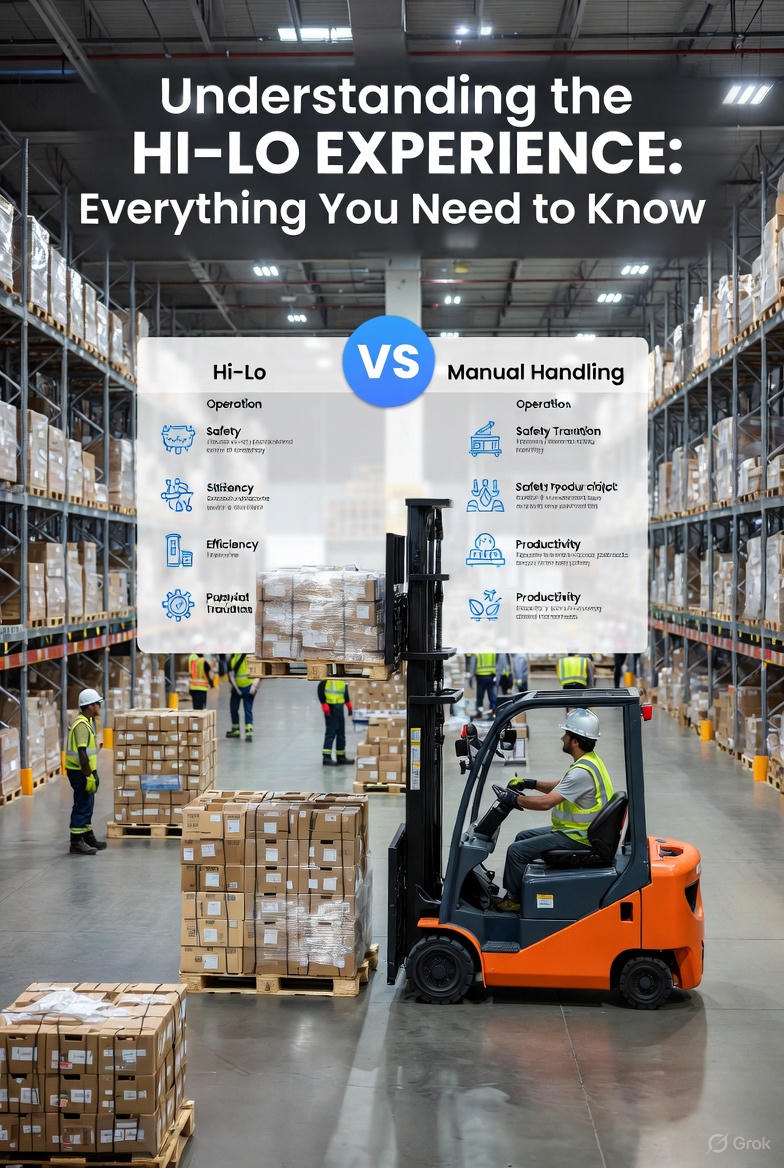
The hi-lo experience involves operating specialized equipment in warehouses and factories. If you’re asking what hi-lo expertise is, it’s about using forklifts or industrial trucks to move goods safely. This role is key in logistics, helping keep operations smooth. Many start in entry-level jobs and gain skills over time. With the rise of e-commerce, demand for this experience has grown. We’ll cover all aspects, from basics to advanced tips, in simple terms. Whether you’re considering a career or just curious, this guide helps you understand what a hi-lo experience is entirely.
What Is Hi-Lo Experience?
What is a hi-lo experience? It’s the hands-on knowledge of driving hi-lo machines, which are forklifts used to lift and transport heavy items. These trucks have forks that go high and low, which is why they’re called ‘high-low’ trucks. Operators learn to navigate tight spaces, stack pallets, and load trucks efficiently.
This experience builds through training and practice. Certifications from bodies like OSHA ensure safety. In warehouses, hi-lo drivers handle inventory, reducing manual labor. What is hi-lo experience in action? It’s checking equipment daily, following protocols, and adapting to different loads. Resources from government sites emphasize proper use of OSHA-powered trucks. For beginners, it’s exciting yet demanding. Overall, it combines skill with responsibility for smooth operations.
History of Hi-Lo Equipment
The history of hi-lo equipment dates back to the early 1900s. Early versions were simple hand trucks, but by the 1920s, powered forklifts emerged to aid factories. World War II boosted development, with models like the Clark Trucktractor becoming standard.
Post-war, hi-lo became common in warehouses. The 1960s saw the introduction of electric versions for indoor use. Today, a hi-lo experience includes modern features such as automation. Educational overviews trace this evolution, Library of Congress Mysteries. Innovations focused on safety and efficiency. From manual to high-tech, hi-lo has transformed material handling. If you’re exploring what a hi-lo experience is, knowing its past shows how it supports global supply chains.
Key Features of Hi-Lo Machines
Hi-lo machines feature adjustable forks for various loads, hydraulic lifts for height control, and stable bases to prevent tipping. Electric models offer quiet operation, while gas models provide power for outdoor use.
Controls include joysticks for precision. Safety elements like horns and lights are standard. What is a hi-lo experience without these? It’s mastering features for tasks like stacking. Batteries or fuel systems ensure long shifts: industry standards guide designs, ANSI Standards. Ergonomic seats reduce fatigue. These traits make hi-lo versatile for different environments. Understanding them helps operators perform better.
Benefits of Gaining Hi-Lo Experience
Gaining hi-lo experience opens doors in logistics jobs. It builds confidence in handling equipment, leading to higher pay; many report job satisfaction from active roles.
Benefits include physical fitness from movement and mental sharpness from quick decisions. What is hi-lo experience worth? It teaches teamwork in busy settings. Certifications boost resumes. Inspirationfeed highlights skill-building in trades. Environmentally, efficient operation cuts waste. Overall, it’s a path to stable work with growth potential.
Career Growth
Experience leads to supervisor roles.
Health Perks
Active work promotes strength. (131 words)
Potential Risks in Hi-Lo Operations
Risks include accidents caused by improper use, such as tipping over heavy loads. Injuries can occur if the gear is not worn. Fatigue raises error chances.
What is a hi-lo experience without safety? It’s essential to avoid risks through checks. Collisions in crowded areas are common. Training mitigates these. Always follow guidelines to stay safe.
Common Hazards
Watch for uneven floors.
Prevention Tips
Always use seatbelts.
Technology in Hi-Lo Equipment
Modern hi-lo uses sensors for collision avoidance. GPS tracks locations in large warehouses. Electric models feature regenerative braking.
This tech enhances precision. What is the hi-lo experience today? It’s integrating apps for inventory. Automation, like self-driving forks, is emerging. It improves efficiency while reducing strain.
Sensor Advances
Detect obstacles automatically.
Types of Hi-Lo Machines
Types include counterbalance for general use, reach trucks for high shelves, and pallet jacks for light loads. Each suits specific tasks.
What is a hi-lo experience in variety? It’s about choosing the right type for the job. Electric for indoors, diesel for outdoors. This diversity meets industry needs.
Training for Hi-Lo Experience
Training starts with classroom lessons on the rules, followed by hands-on practice. Certifications last 3 years and require refreshers.
Programs cover load balancing and emergency stops. What is a hi-lo experience building? It’s through simulated scenarios. Online courses supplement in-person sessions. Proper training ensures competence.
Comparison: Hi-Lo vs. Manual Handling
| Aspect | Hi-Lo Experience | Manual Handling |
|---|---|---|
| Efficiency | High, fast movement | Low, time-consuming |
| Safety | Better with training | Higher injury risk |
| Cost | Initial investment | Low upfront |
| Capacity | Heavy loads | Limited weight |
| Fatigue | Reduced | High |
| Speed | Quick operations | Slow |
This table shows why a high-low experience matters.
Key Takeaways
Key points on what a hi-lo experience:
- Involves forklift operation skills.
- History from the early 1900s.
- Benefits career and health.
- Risks managed with training.
- Tech like sensors aids use.
- Types for various needs.
- Training is essential for safety.
These summarize the essentials.
Conclusion
Understanding what a hi-lo experience is reveals its role in modern work. From history to tech, it’s vital for efficiency. Benefits outweigh risks with care. Gain skills for rewarding paths. What is a hi-lo experience? A blend of responsibility and opportunity. Explore it for your career.
FAQ
What is a hi-lo experience exactly?
Operating forklifts in warehouses.
How to get certified?
Through OSHA-approved courses.
Are there risks?
Yes, but training helps.
What tech is used?
Sensors and GPS.
Best for beginners?
Start with basic models.