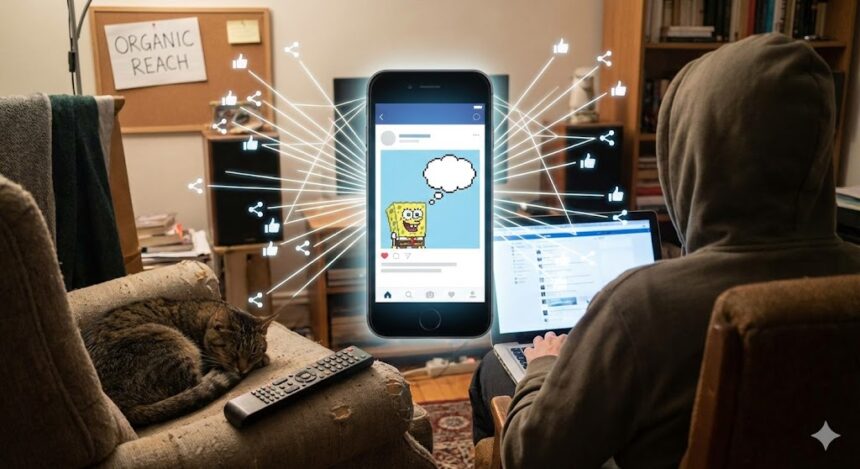
In the vast, noisy expanse of the internet, a strange and powerful phenomenon occurs daily: an ordinary piece of content, a short video, a meme, a tweet catches fire. It spreads from person to person, platform to platform, achieving millions of views and global recognition, often without a single penny spent on advertising or a PR team behind it. This is the mystery of organic virality. For creators, marketers, and casual observers alike, the question persists: why do videos go viral seemingly on their own? The answer lies not in luck alone, but in a powerful alchemy of human psychology, social mechanics, and digital ecosystem dynamics.
This article will dissect the core principles that cause certain internet moments to break through the noise without any formal promotion. We will move beyond guesswork and explore the evidence-based triggers that compel people to share.
The Psychological Engine: What Compels Us to Click “Share”?
At its heart, virality is a human behavior. Content spreads because individuals choose to share it. Understanding the psychological levers that drive this action is the first step to decoding virality.
1. High-Arousal Emotions: The Primary Fuel
Research, notably from the University of Pennsylvania’s Wharton School, indicates that content evoking high-arousal emotions is significantly more likely to be shared. These emotions act as a catalyst, creating an urgent need to pass the feeling on.
-
Awe: Content that inspires wonder, from breathtaking natural phenomena to incredible human achievements (e.g., a stunning spacewalk video from NASA).
-
Amusement: Laughter is profoundly social. Funny clips, unexpected animal antics, or perfect comedic timing create a shared moment of joy.
-
Anxiety/Outrage: While negative, these powerful emotions drive engagement. Content that sparks moral indignation or concern often spreads quickly as people seek to warn others or rally a community. However, this type of virality can be volatile and damaging.
-
Surprise/Curiosity: The “Wait, what?” moment. Content that defies expectations or presents an intriguing puzzle (like an unusual life hack) prompts sharing as a way to discuss and resolve the surprise.
Conversely, low-arousal emotions like sadness or contentment, while important, typically do not trigger the same urgent sharing impulse.
2. Social Currency: Sharing to Shape Our Identity
We curate our online identities through what we share. Content acts as social currency; it provides value to our relationships and reinforces how we want to be perceived.
-
To Appear Knowledgeable or “In the Know”: Sharing a cutting-edge meme or a niche, brilliant video first makes the sharer look connected and savvy.
-
To Strengthen Bonds: Sending a funny video to a friend with the message “This reminded me of you!” reinforces a shared sense of humor and connection.
-
To Signal Affiliation or Values: Sharing content related to a cause, a political view, or a community (e.g., a heartwarming story about kindness) signals to our network what we care about.
3. Practical Value & Utility: The “You Have to See This” Factor
Genuinely useful content saves people time, money, or improves their lives. This practical value gives people a clear, altruistic reason to share.
-
Life Hacks & Tutorials: A surprisingly effective cleaning tip or a genius way to organize a space.
-
Public Service or Critical Information: During a crisis, vital info about safety or resources can go viral organically as people look out for one another.
-
Money-Saving Tips: Who doesn’t want to help their friends save money?
The Sociological Framework: The Context of Sharing
Psychology explains the impulse, but sociology explains the context. Virality requires a fertile social environment.
1. Relatability & “Mood of the Crowd”:
Content that taps into a widely shared experience or a current collective feeling has a massive advantage. A video about the universal struggle of Monday mornings or the frustration with a poorly designed everyday object resonates because millions immediately understand it. It becomes a shared inside joke for a culture or generation.
2. Narrative & Storytelling:
Humans are wired for stories. A viral moment often has a clear, concise narrative arc—even in 15 seconds. There’s a setup, an unexpected twist, and a resolution. Think of the “Unexpected Item in Bagging Area” videos; they are mini-stories of confusion and humor. A compelling story is more memorable and shareable than a standalone fact.
3. The Bandwagon Effect & FOMO:
Virality begets more virality. When we see a video with 10 million views, our curiosity is piqued. We don’t want to be left out of the cultural conversation. This creates a positive feedback loop: sharing increases visibility, which invites more sharing from those who fear missing out.
The Platform’s Role: Algorithms as Accelerants
While platforms don’t create virality from nothing, their algorithms are designed to detect and exponentially amplify content that is already generating positive engagement signals. They are the megaphone for the crowd’s whispers.
-
The Engagement Metric Vortex: Algorithms on TikTok, Instagram Reels, and YouTube Shorts prioritize content that keeps users on the platform. High completion rates, shares, comments, and likes signal that a piece of content is compelling. The algorithm then serves it to a wider and wider audience, creating a snowball effect.
-
The Power of the “For You” Page: These algorithmic feeds are the modern-day discovery engine. They allow completely unknown creators to be placed in front of massive audiences if their content resonates, removing the need for an existing follower base.
Case Study Analysis: Deconstructing Unpromoted Virals
Let’s apply these principles to real, unpromoted viral moments.
| Viral Moment | Psychological Trigger | Social Currency | Platform Role |
|---|---|---|---|
| “Sea Shanty” Trend (2021) | Awe (harmonic beauty), Surprise (unexpected source) | Appearing knowledgeable about a quirky trend, community participation | TikTok’s duet feature enabled mass participation, algorithm spread creative remixes. |
| “The Dress” (Blue/Black or White/Gold) (2015) | Surprise, Curiosity, mild Anxiety (perceptual confusion) | Sparking debate, being part of a global puzzle. Fueled social and office conversations. | Twitter and Facebook facilitated rapid, global polling and discussion, creating a shared experience. |
| NASA’s Mars Rover Landing Videos (2021) | Awe, Wonder | Signaling support for science, sharing a historic achievement. | YouTube’s live stream and recommendation algorithm highlighted it to interested users, but sharing was driven by innate awe. |
The Uncontrollable Element: Timing, Luck, and Cultural Receptivity
Even with all the right ingredients, an element of chance persists. The right content must meet the right audience at the right cultural moment. A meme about working from home might have flopped in 201,8 but became explosively relatable in 2020. Luck plays a role in whether the first few engagements come from users with highly connected networks who can provide the initial spark.
Conclusion: Virality is Not Magic, It’s a Formula
While there is no guaranteed recipe, the phenomenon of unpromoted virality is far from random. It is the result of a powerful confluence:
-
Content that triggers a high-arousal emotional response.
-
A Context that makes the content socially valuable or relatable.
-
A Platform whose algorithms can efficiently recognize and scale that engagement.
-
A Seed of Luck that places it in front of the right initial audience.
For creators and brands, the lesson is not to try to “engineer” a viral hit desperately, but to focus on creating genuinely resonant, emotionally engaging, and valuable content. Authenticity often beats high production value in the viral race. As explored here on Inspirationfeed, understanding the “why” behind human sharing is the first step to creating work that has the potential to connect with the world. The goal should be to make content worth sharing, and then let the complex, fascinating machinery of human social behavior do the rest.
Further Reading & Research:
-
For an academic perspective on emotion and sharing, see the study published in the Marketing Science journal, “What Makes Online Content Viral?” by Berger and Milkman.
-
The Harvard Business Review has published numerous accessible articles on the concepts of social currency and word-of-mouth.
-
To understand public engagement with science, resources from the Centers for Disease Control and Prevention (CDC) offer insights into how factual information can spread effectively.