

Quick Answer: Making a difference in conservation does not require a big budget or a science degree. It comes down to a handful of ordinary decisions, repeated: use less and waste less at home, learn about the nature where you live, give your time or money to groups doing the work on the ground, and talk about it so others join in. No single action saves a species on its own. But millions of small ones, added together, are how habitats get protected, wildlife recovers, and bad habits in a community slowly change. Start with one thing you can keep doing, not ten things you will abandon by February.
Conservation has an image problem. It sounds like something that happens far away, done by experts in khaki, involving rainforests and rhinos. In reality, most conservation is local and unglamorous: somebody planting native flowers, somebody counting birds, somebody picking litter out of a stream, somebody choosing not to pave over a front garden. The planet-scale problems are real, but the work that answers them is almost always done at human scale, by ordinary people, close to home.
That is the spirit of the Voices of Conservation blog, which covers biodiversity, climate change and community conservation stories — the small, practical end of a very large subject. This guide follows the same idea: what one person can actually do, this week, without waiting for permission or a pay rise.
Start where you live
The most useful conservation work starts with paying attention to your own patch. Learn which birds visit your garden, which trees line your street, which wildflowers grow on the verge. This sounds sentimental, but it is practical: you cannot protect what you have never noticed, and you will not miss what you never knew was there.
A few minutes a week is enough. Walk the same route and notice what changes with the seasons. Leave a corner of the garden a little wild — long grass, a pile of logs, a patch of nettles — and watch what moves in. Avoid pesticides where you can; a garden full of insects is a garden that feeds birds. Plant native species rather than exotic ornamentals when you get the choice, because local wildlife evolved with local plants. If you have no garden, a window box or a balcony pot still counts. The point is not the size of the space. It is the habit of noticing.
Use less, waste less
Every product you buy took resources to make and will take resources to dispose of. Cutting waste is therefore conservation, not just tidiness. The usual advice still works because it is genuinely effective: buy less, choose durable things over disposable ones, repair before replacing, and recycle what is left properly.
Some of the highest-impact swaps are dull ones. Reusable bags, bottles and containers instead of single-use versions. Less meat, less often, if that fits your life — food production is one of the largest drivers of habitat loss, and even small reductions add up across a household. Less energy at home: turn things off, insulate where you can, wash clothes cooler. None of these is heroic. All of them reduce the pressure on the land and water that wildlife needs, and they usually save money too.
Water deserves its own mention. Fresh water is finite, and the way we use it at home — long showers, hosepipes, washing cars — draws directly on rivers and aquifers that wildlife depends on. Fixing a dripping tap and watering the garden in the evening rather than at noon are small acts with real effects, especially in dry summers.
Give your time
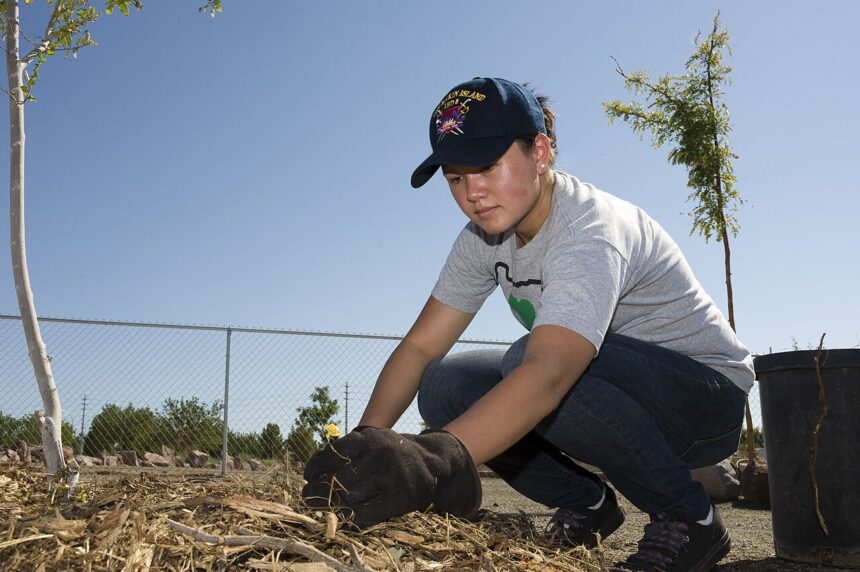
Money helps conservation, but time is often worth more. Local groups are usually short of hands rather than short of ideas, and most of their work needs no special skill: clearing invasive plants, planting trees, building nest boxes, counting species, picking up litter, staffing a stall at a fair.
Look for the groups already working near you — wildlife trusts, friends-of-the-park groups, river clean-up teams, community gardens. Most welcome newcomers and provide the tools and the training. A Saturday morning a month is a realistic commitment, and it has a side benefit the brochures rarely mention: it is good company. Conservation volunteering is one of the easiest ways to meet neighbours who care about the same things you do.
If getting outdoors is difficult, there is work that can be done from a desk. Many organisations need help with social media, fundraising, data entry, or identifying species in photographs. Citizen science projects let you contribute real data — counting birds from your window, logging insects, recording when the first swifts arrive — that researchers genuinely use. The IUCN, the global authority that assesses which species are threatened, relies on exactly this kind of shared knowledge to build its picture of the natural world.
Give money wisely
Donations fund the unglamorous backbone of conservation: rangers’ wages, land purchase, legal challenges, scientific monitoring. A small regular donation is usually more useful to a charity than a large one-off gift, because it lets them plan. Before giving, check what the organisation actually does with its money — reputable charities publish annual reports, and a few minutes reading one will tell you more than any appeal letter.
Fundraising of your own counts too. A sponsored walk, a bake sale, a charity run — these raise modest sums, but they also do something a direct debit cannot: they make conservation visible to your friends and family. People give to causes they have seen a real person care about.
Use your voice
Talking about conservation is not showing off. It is how ideas spread. Most people never hear about the local wildlife group, the planning application that would pave a meadow, or the simple swap that cut a household’s waste in half — until somebody tells them. Share what you learn, in person or online, and share it plainly: what you did, what it cost, what changed.
That also applies to the decisions made above your head. Planning decisions, local budgets and national policy shape nature far more than any individual’s shopping. Writing to a local councillor about a threatened green space, responding to a consultation, or voting with nature in mind are all part of conservation, even if they feel less satisfying than planting a tree. The organisations that do this work professionally, like WWF UK, publish clear explanations of the policy fights that matter — worth reading before you decide where your voice is best spent.
None of this will fix the planet on its own. That is not the point. The point is that conservation is not a spectator activity, and it never was. It is a thousand small decisions by a thousand ordinary people, repeated until they add up to something a single person could never do alone. Pick the one that fits your life, start this week, and let it grow from there.
Frequently Asked Questions
What can one person really do for conservation?
More than it feels like. Using less and wasting less at home, learning about local nature, volunteering a few hours a month, donating to a reputable group, and talking about it all add up. No single action saves a species, but conservation has always been the sum of many small actions by many people.
How can I help conservation without spending money?
Volunteer your time with a local wildlife or clean-up group, take part in citizen science by counting birds or logging insects, leave part of your garden wild, and use less water and energy at home. Most local groups provide tools and training, and none of these cost anything.
Is it better to donate money or volunteer time?
Both help, in different ways. Money funds wages, land and monitoring that volunteers cannot provide; time provides hands for practical work that money cannot buy. If you can only do one, pick the one you will actually keep doing — a small regular donation or a Saturday morning a month beats a grand gesture you abandon.
How do I know a conservation charity is trustworthy?
Check its annual report and accounts, which reputable charities publish, and look for clear evidence of what it does with donations — specific projects, places and results rather than vague promises. Registered charities are also listed with the relevant charity regulator, which is a quick check worth doing.
Related Reading
- Zero-Waste Swaps to Save Money Every Week — practical swaps that cut waste and save money at the same time.
- Sustainable Living Hacks for Urban Apartments — greener living when you have no garden and very little space.
- Odor-Free Composting at Home: A Complete Guide to Smell-Free Black Gold — turning kitchen waste into something your soil will thank you for.