

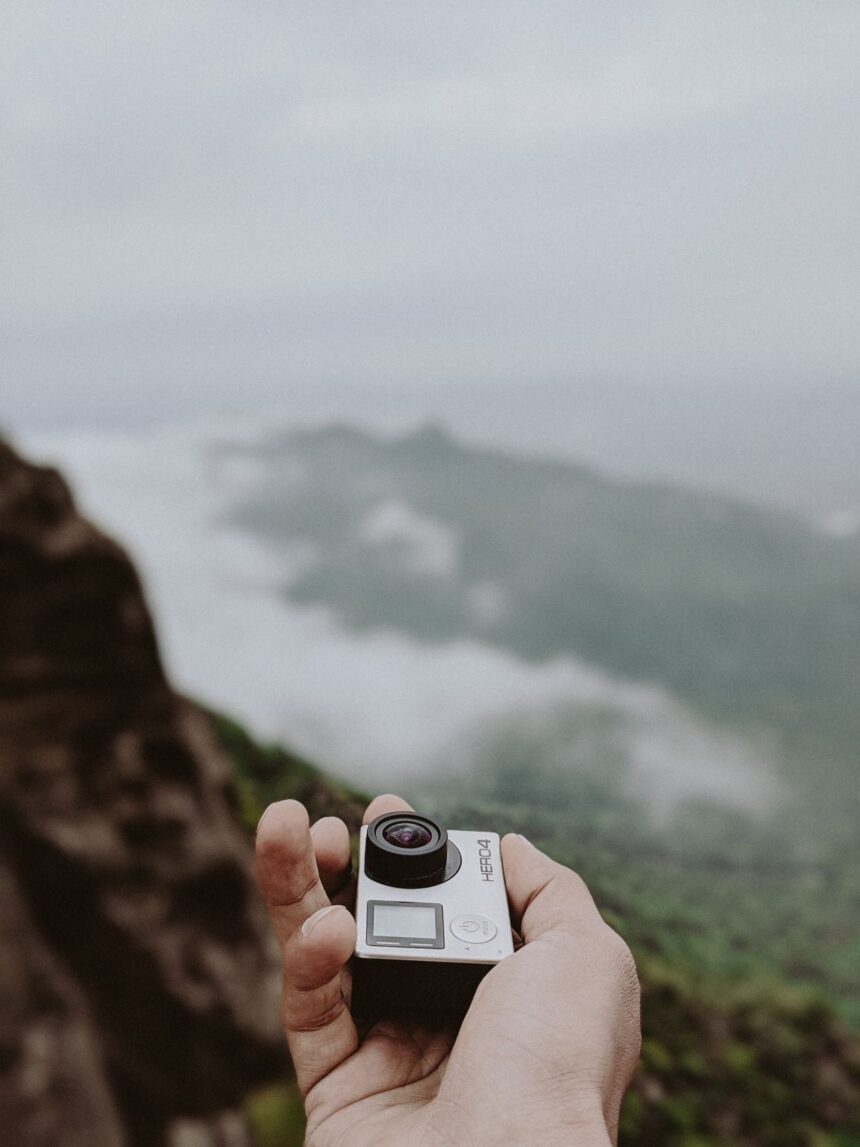
Quick Answer: An action camera flashlight is a small continuous LED light that mounts on or beside your action camera. It exists because action cameras have tiny sensors and no flash, so their footage turns grainy and dark the moment the sun goes down or you go underwater. A good light fixes that. When choosing one, look at brightness, beam shape, waterproof depth, battery life and how it mounts, and pick the one that matches where you actually shoot rather than the one with the biggest numbers on the box.
Why action cameras struggle in the dark
An action camera is built to be small, tough and waterproof, and the trade-off is a small sensor that does not gather much light. In daylight that hardly matters. At dusk, in a forest, inside a cave or under water, it matters a lot: colours wash out, detail disappears into shadow, and the footage fills with grain as the camera pushes its sensitivity up to compensate. Unlike a phone or a larger camera, an action camera has no flash and no room for a big lens. A clip-on light is the practical answer. It is a continuous light source, so what you see is what the camera records, and it works for video as well as stills.
The same light also makes you safer. On a night hike or a dive, the light that fills in your shot is also the light that shows you the path, the rocks or the reef in front of you. That is worth remembering when you are choosing between a light that only mounts on the camera and one you can also hold in your hand.
The types of light you will find
Most action camera lights fall into a few recognisable types, and the differences between them matter more than the brand on the box.
Compact LED panels are the most common. They are small, flat, lightweight and easy to mount on a cold shoe or a GoPro-style mount. They give a broad, even wash of light, which suits close subjects and indoor shooting. Adjustable beam lights let you change the spread from a wide flood to a narrow spot. A flood suits landscapes and groups; a spot suits a single subject further away, such as a diver or a climber. Waterproof dive lights are built for depth, with sealed bodies and O-rings, and they are the only sensible choice for underwater work. A light that is only splash-proof will not survive a dive. Finally, there are the power options: rechargeable lights with a built-in battery, usually charged over USB-C, and lights that take replaceable batteries. Rechargeable is more convenient for most people; replaceable batteries are useful on long trips away from power.
What to look for before buying
| Brightness | Measured in lumens. More is not automatically better: a very bright light close to a subject will blow it out. Look for adjustable levels so you can match the light to the scene. |
| Beam shape | A wide beam for landscapes and groups, a narrow beam for distant subjects. Adjustable is best if you shoot both. |
| Waterproof rating | Check the depth, not just the word waterproof. A light rated to 10 metres is fine for snorkelling; diving needs a deeper rating. |
| Battery and runtime | Runtime drops sharply at full brightness. Check the runtime at the level you will actually use, and carry a spare or a power bank. |
| Mounting | Make sure it fits your camera. GoPro-style mounts and cold shoes cover most cameras, but check before you buy, especially for older models. |
| Weight | Every gram matters on a helmet or a chest mount. A heavy light changes the balance of the camera and tires your neck on a long shoot. |
| Colour and diffusion | Some lights let you change colour temperature or add a diffuser, which softens the light and keeps skin tones natural. |
How to use it well
Mount the light securely and test it before you leave. A loose light rattles, and a rattling light ruins audio as well as footage. Start at a low brightness and work up: it is easier to add light than to rescue an overexposed shot. If you can, angle the light slightly off the camera axis rather than pointing it straight ahead. Light from the same angle as the lens flattens everything and creates a bright spot in the middle of the frame. A few degrees to the side gives the scene depth and shape.
Lower your camera’s ISO when the light is on. The light is doing the work now, so the camera does not need to amplify a weak signal, and the footage will be cleaner. Before a dive, check the O-ring seals and make sure the light is properly closed; after salt water, rinse it in fresh water and dry it before you open it. And always check the battery before you head out. There is nothing worse than reaching the cave entrance and finding the light is flat.
Brands worth a look
GoPro’s own Light Mod is the obvious starting point if you shoot with a GoPro. It has four brightness levels up to 200 lumens, is waterproof to 10 metres, charges over USB-C and runs for up to 6 hours on its lowest setting, according to ShotKit’s round-up of action camera lights. Lume Cube makes compact lights that are popular with creators for their brightness and build quality. Neewer offers affordable LED panels with adjustable brightness that suit beginners and anyone on a budget. Suptig specialises in waterproof video lights aimed at divers. ULANZI makes small LED lights with cold shoe mounts that work across many cameras, not just GoPros. None of these is the right choice for everyone; the right one is the one that fits your camera, your depth and your budget.
Frequently Asked Questions
Do action cameras have a built-in light?
No. Action cameras do not have a built-in flash or light. You need a separate LED light that mounts on the camera or beside it, and it provides continuous light for both photos and video.
How bright should an action camera light be?
It depends on what you shoot. For close subjects and indoor use, a modest adjustable light is enough. For night hiking or diving, you will want a brighter light with several levels. Adjustable brightness matters more than the maximum number, because a light that is too bright close up will wash out your subject.
Can I use an action camera light underwater?
Only if it is rated for the depth you plan to dive to. A splash-proof light will not survive a dive. Check the depth rating before you buy, inspect the seals before each dive, and rinse the light in fresh water afterwards.
What mount do I need for an action camera light?
Most lights use a GoPro-style mount or a cold shoe mount, which fits most action cameras. Check compatibility with your camera model before buying, especially for older cameras that may need an adapter or a media mod to attach accessories.