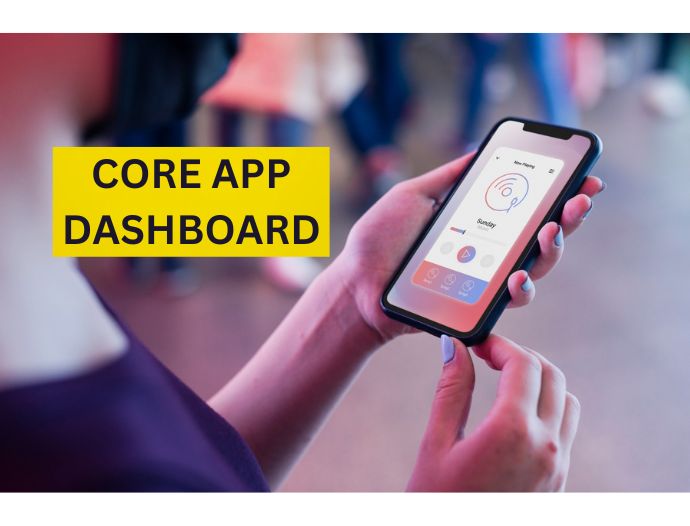
The world of business and technology moves faster than ever, driven by vast amounts of data. To keep up, you need a central hub, a control center that brings all your most important information into one clear, easy-to-understand view. This vital tool is the Core App Dashboard. It’s more than just a colorful screen; it’s a dynamic interface that consolidates essential data from various applications and sources, turning raw numbers into meaningful, actionable insights. Imagine trying to check your car’s speed, fuel level, and engine temperature by looking at three separate gauges scattered across the car—it would be impossible to drive effectively! A dashboard puts all this critical information right in front of you. Similarly, in the business world, a well-designed dashboard is crucial for monitoring performance, managing resources, and making quick, informed decisions. It helps different departments, from sales to operations, stay on the same page and focus on what truly matters for the organization’s success. This centralized view reduces confusion and ensures that everyone is working with the same, up-to-the-minute information, making it an indispensable asset in today’s data-driven landscape.
Defining the Core App Dashboard
A Core App Dashboard serves as the single source of truth for an application or a suite of core business applications. It is specifically designed to provide a comprehensive, at-a-glance overview of Key Performance Indicators (KPIs) and critical metrics related to performance, user engagement, and operational health. Think of it as the ultimate summary page for your digital ecosystem. Unlike specialized or operational dashboards that focus on niche areas, the core dashboard aims for a holistic view, drawing data from multiple integrated systems, such as Customer Relationship Management (CRM), Enterprise Resource Planning (ERP), and analytics platforms. This aggregation eliminates the need to jump between countless tabs and applications, saving precious time and reducing the risk of data silos that lock information away in separate systems. Its primary function is not just to display data but to organize it in a visually intuitive way, typically using charts, graphs, and simple scorecards, allowing decision-makers to quickly gauge the current state of affairs and spot emerging trends or issues before they become significant problems.
Key Features of a High-Performing Core App Dashboard
An effective Core App Dashboard isn’t just about showing numbers; it’s about presenting them in a way that drives direct action. The best dashboards share a set of common, powerful characteristics that make them indispensable for any business aiming for peak efficiency and informed strategy. These features ensure the dashboard is not a passive display but an active tool for management and analysis. A well-designed dashboard should include robust real-time data processing, meaning the information you see is live, not hours old, enabling immediate responses to changes in the market or internal operations. Furthermore, it must offer seamless data integration with a variety of internal and external sources—from databases to third-party marketing tools—to paint a complete picture. Customization and flexibility are also critical, allowing different users (like a Sales Manager versus a Product Manager) to tailor the view to their specific needs and goals. Finally, strong data visualization is non-negotiable; complex data must be translated into simple, easy-to-read charts, like bar charts for comparisons and line graphs for trends, making the information digestible at a glance.
The Power of Real-Time Data Visualization
Real-time data visualization is the heartbeat of a truly powerful Core App Dashboard. It’s what moves the dashboard from a historical report to a proactive tool. The ability to see metrics update in real time allows teams to monitor the pulse of their operations and make instantaneous decisions. Imagine running an e-commerce promotion and watching conversion rates and inventory levels refresh every few seconds. This immediate feedback loop is invaluable. It’s the difference between reacting to a crisis that happened last night and preventing a problem right now. For instance, if an application server begins experiencing high latency, a real-time dashboard can immediately flag the anomaly, allowing IT teams to intervene before users notice a slowdown. Visualizations such as live gauges, scrolling tickers, and dynamic line charts convey this immediacy. This constant stream of current information empowers employees at all levels, fostering a culture where data-driven action is the norm rather than the exception. The responsiveness of the data directly correlates with the business’s agility and competitiveness.
How a Core App Dashboard Streamlines Operations
Beyond providing insights, a Core App Dashboard fundamentally streamlines daily operations by acting as a central command post. Aggregating data and alerts from various operational tools reduces employees’ cognitive load, as they no longer need to log in to five different systems to get a status update. This consolidation of information leads to a significant increase in efficiency and a marked decrease in administrative overhead. For project management, for example, a dashboard can display task completion rates, budget consumption, and team workloads all in one place. Team leaders can quickly identify bottlenecks or resource shortages, allowing for dynamic adjustments rather than waiting for weekly status meetings. This efficiency gain is critical for modern businesses. An excellent analogy for this organizational efficiency is a pilot’s dashboard in an airplane, which presents all flight metrics—altitude, speed, heading, and fuel—in a coherent way, enabling complex decision-making under pressure. This operational streamlining doesn’t just save time; it improves the overall quality and speed of service delivery, allowing organizations to maintain higher standards consistently.
Leveraging KPIs for Strategic Decision Making
The actual strategic value of the Core App Dashboard lies in its focused presentation of Key Performance Indicators (KPIs). These aren’t just any metrics; they are the measurements that directly reflect the organization’s most important goals. For a core dashboard, these KPIs must be carefully selected to provide a clear indication of overall business health. When executives and managers review the dashboard, they are looking for red flags or green lights related to their strategic objectives. For example, a financial KPI like Customer Lifetime Value (CLV), when trended over time, can inform long-term product and marketing strategy, while an operational KPI like Average Resolution Time for support tickets can guide resource allocation within the customer service department. By making these critical metrics highly visible and contextual, the dashboard ensures that every operational decision—from budget approval to process change—is aligned with the bigger strategic picture. This continuous, data-backed oversight transforms business strategy from an annual event into an always-on process. For more on strategic alignment, visit InspirationFeed for helpful resources.
Comparing Dashboard Types
Different types of dashboards serve various purposes. Understanding these differences helps to clarify the unique role of the Core App Dashboard.
| Dashboard Type | Primary Audience | Goal/Purpose | Typical Time Horizon |
| Operational | Frontline Staff, Supervisors | Monitor real-time activities and processes to take immediate action. | Minutes, Hours (Real-time) |
| Tactical (Core App) | Managers, Team Leaders | Track progress toward specific departmental goals and efficiency. | Day, Week, Month |
| Strategic | Executives, Directors | Monitor long-term goals, overall health, and strategic performance. | Quarter, Year |
| Analytical | Data Analysts, Researchers | Explore data, find root causes, and uncover trends for deep dives. | Historical, Flexible |
This comparison highlights that the Core App Dashboard is a tactical tool that bridges the gap between immediate operational activity and long-term strategic goals.
Hidden Insights: Beyond the Surface Level
The beauty of a centralized data view is the ability to uncover hidden insights that are obscured when data is fragmented across multiple systems. By correlating metrics across applications, the Core App Dashboard lets you see relationships between seemingly unrelated data points. For example, you might notice a sharp decline in user engagement (from your product analytics app) that correlates perfectly with an increase in server errors (from your IT monitoring tool). When viewed separately, these are two independent issues, but the dashboard reveals their direct causal relationship. This deep correlation analysis is where the real competitive advantage is found. It moves a business from simply reporting on what did happen to understanding why it happened and, critically, predicting what will happen next. The ability to spot these non-obvious connections is what separates reactive businesses from proactive, forward-thinking market leaders.
Security and Access Control
While a Core App Dashboard centralizes information, it must also be built with robust security and access control measures. Not every user needs to see every piece of data. Implementing role-based access control (RBAC) is a fundamental best practice. This ensures that a sales representative only sees sales-related metrics for their territory, while a financial controller sees high-level P&L statements. This segmentation protects sensitive information and, equally importantly, prevents information overload. Giving users only the data they need to perform their jobs effectively actually makes the dashboard more useful. In addition to internal access, the system must adhere to modern security standards, including data encryption both in transit and at rest, protecting the organization’s most valuable asset: its data. Protecting this central hub is paramount, as a breach here could compromise information across all integrated systems. For guidance on data security best practices, reputable sources like the National Institute of Standards and Technology (NIST) provide excellent resources https://www.nist.gov/.
Design Principles for an Effective Core App Dashboard
Creating a dashboard that is both powerful and easy to use requires following proven design principles. A cluttered, confusing dashboard is just as useless as no dashboard at all. The central rule is simplicity and clarity.
Focus on Your Audience
The dashboard should always be designed with the end-user in mind. What decisions do they need to make? What information is essential for their role? An executive dashboard should focus on a few high-level KPIs, while a tactical manager’s dashboard can include more granular details, such as daily metrics and task statuses.
Utilizing Visual Hierarchy
Effective design uses visual hierarchy to guide the user’s eye. The most important metrics should be placed in the top-left corner (following the natural ‘F’ or ‘Z’ scanning pattern) and presented using large, bold fonts or vibrant colors. Less critical, but still useful, supporting data can follow. Use white space effectively to separate sections and reduce cognitive load, making the data breathe and easier to digest at a glance.
Key Takeaways for Implementing a Core App Dashboard
-
Centralization is Key: Consolidate your most critical data into a single, unified view to eliminate data silos and context switching.
-
Actionable Insights: Ensure every dashboard metric is link to a potential action or decision. If it doesn’t lead to action, it doesn’t belong on the core dashboard.
-
Design for Clarity: Prioritize simplicity, use appropriate charts (like line charts for trends, bar charts for comparisons), and implement strong visual hierarchy.
-
Prioritize Real-Time: The dashboard must display real-time or near-real-time data to support immediate operational decision-making and agility.
FAQ
Q: What is the main difference between a Core App Dashboard and a Report?
A: A report is typically static, historical, and text-heavy, providing detailed data on a specific period. A Core App Dashboard is dynamic, real-time, highly visual, and designed for monitoring and immediate decision-making at a glance.
Q: How often should the dashboard data be updated?
A: For a Core App Dashboard, the data should ideally update in real-time or as close to real-time as the data sources allow (e.g., every minute). If real-time is not feasible for all metrics, mission-critical KPIs should be updated far more frequently than historical or less urgent metrics.
Q: What are LSI and NLP keywords related to the Core App Dashboard?
A: Related keywords include business intelligence, data visualization, KPI monitoring, performance metrics, centralized data, and analytics platform. Using these terms naturally helps search engines understand the article’s full context. Another valuable resource for understanding analytics is the Massachusetts Institute of Technology (MIT) ’s Sloan School of Management publications on data science [https://mitsloan.mit.edu/].
Conclusion
The Core App Dashboard is not a luxury; it is a fundamental necessity for any organization looking to thrive in the modern, data-saturated world. By delivering a unified, real-time view of your critical business information, it empowers teams to make faster, smarter, and more strategic decisions. The journey to unlocking hidden insights begins with centralizing your data and presenting it with clarity and purpose. By adopting a well-designed Core App Dashboard, you transition from merely tracking your business to actively steering it toward success, ensuring you not only keep pace with the market but also gain a definitive competitive edge. Start evaluating your data flow today and take the first step toward a more efficient and insightful future.